
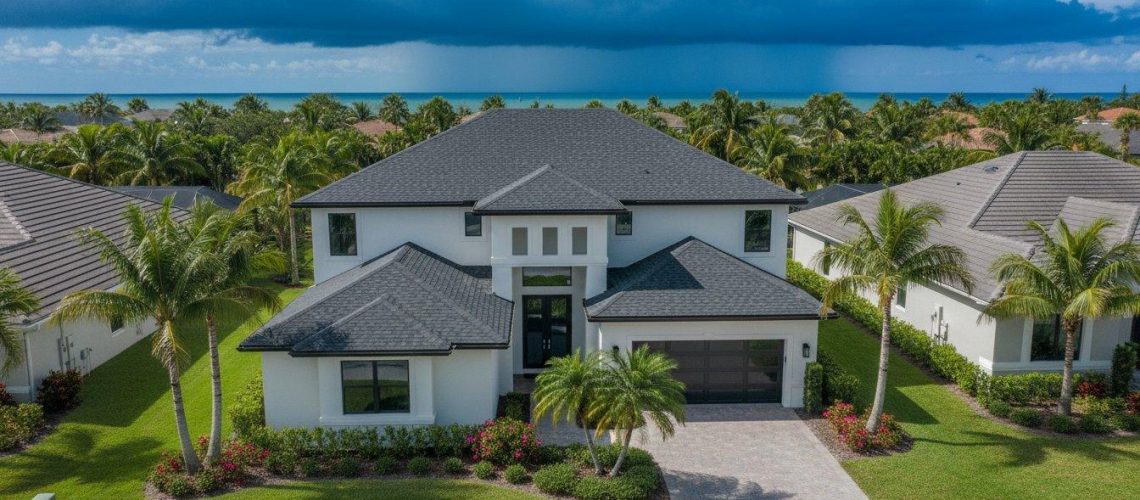

Your roof is the only thing standing between a 130 mph gust and your family’s safety, yet many Tampa homes currently fall short of the upcoming 2026 standards. Since 1987, Rainier Roofing has watched building codes evolve to meet the increasing intensity of Gulf storms. We understand that the fear of roof failure is real, especially when 2024 insurance data shows that non-compliant homes face significantly higher premium spikes. Staying informed about the latest hurricane roof requirements florida mandates is no longer optional; it is a necessity for your peace of mind and your financial security.
You deserve a home that feels like a sanctuary, not a liability. It’s frustrating to deal with shifting regulations and rising costs, but these updates are designed to keep your shingles attached when it matters most. This guide provides a clear, 2026-updated checklist to help you understand the Florida Building Code with confidence. We’ll show you how specific upgrades like secondary water barriers and reinforced decking can secure your home and help you qualify for insurance mitigation discounts. Let’s ensure your Tampa Bay property is ready for whatever the next season brings.
Key Takeaways
- Identify whether your Tampa home sits in a high-risk wind zone and learn how the latest state safety standards apply specifically to your neighborhood.
- Navigate the updated hurricane roof requirements florida with a professional checklist that treats your roof as a unified system designed to withstand extreme wind pressure.
- Understand the “25% Rule” to avoid unexpected costs and ensure your partial repairs don’t accidentally trigger a mandatory, full-code replacement.
- Explore why exceeding minimum safety standards with impact-rated materials is the most reliable way to protect your family’s home and long-term security.
- Learn how partnering with a factory-certified local expert ensures your roof meets every 2026 compliance standard while providing the neighborly trust you can rely on.
Understanding Florida Building Code (FBC) Wind Zones in Tampa Bay
Protecting your home starts with understanding the rules that keep it standing during a storm. The Florida Building Code (FBC) acts as our state’s unified safety standard. It was established to prevent the widespread destruction seen in previous decades by ensuring every structure meets a baseline of resilience. For 2026, homeowners must follow the 8th Edition of the FBC, which became effective on December 31, 2023. This code is the most advanced version yet. It focuses on how individual components, from shingles to underlayment, work together to resist extreme pressure. While South Florida uses High Velocity Hurricane Zones (HVHZ) rules, the Tampa Bay area operates under Wind-Borne Debris Region (WBDR) standards. These hurricane roof requirements florida ensure your home stays sealed even when the wind tries to tear it apart.
Tampa, Brandon, and Wesley Chapel Wind Speed Design
In Hillsborough County, design wind speeds for residential structures typically range from 140 to 150 mph. If you live near the coast in Bradenton, your home faces even higher design pressure requirements because there are fewer obstacles to slow down a storm surge. The 2026 standards require significantly higher uplift resistance than roofs built just a decade ago. At Rainier Roofing, we’ve provided this level of craftsmanship since 1987. We understand that your roof’s attachment points are the frontline of your home’s defense. A roof installed in 2015 might have been legal then, but it doesn’t match the rigorous safety margins we use today to provide the Rainier Difference.
Identifying Your Home’s Risk Profile
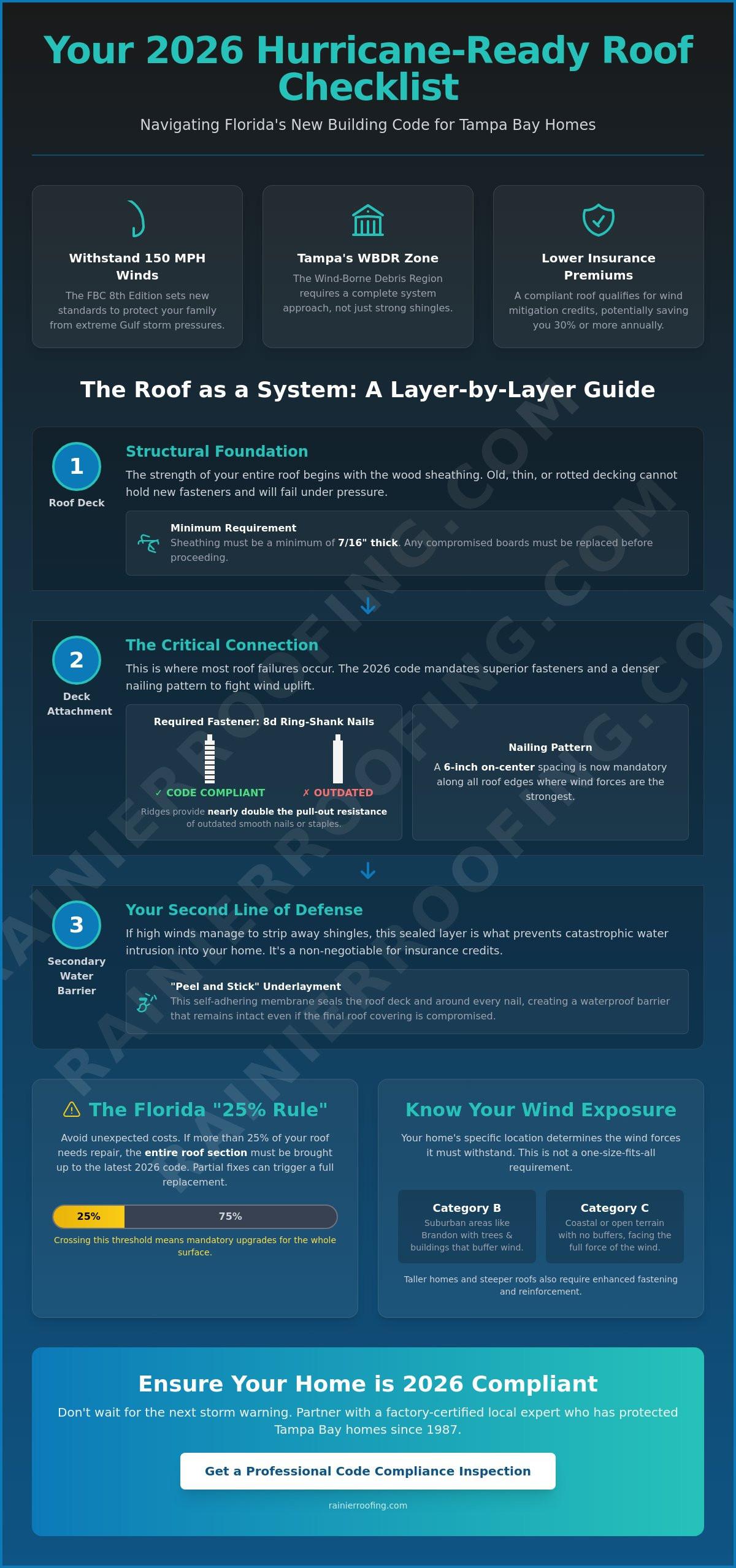
Your specific address determines your risk profile through Exposure Categories. Most homes in suburban areas like Brandon fall under Exposure Category B. This accounts for the “breaking” effect of trees and nearby buildings. However, if your home sits on open terrain or near the water, it qualifies as Exposure Category C. These properties face the full force of the wind without any buffers. Your roof’s pitch and height also change the engineering requirements. A taller home or a steeper roof catches more wind, which requires specialized fastening patterns and reinforced flashing. One-size-fits-all roofing doesn’t work in the Tampa Bay area. We analyze these variables to provide maximum protection and long-term security for your family. This consultative approach identifies potential weak points before the first clouds of a hurricane appear on the horizon.
- FBC 8th Edition: The current governing code for all 2026 installations.
- WBDR: The specific safety zone for Tampa, requiring impact-rated materials.
- Uplift Resistance: A measure of how well your roof stays attached during 150 mph gusts.
- Integrity: Our commitment to following every code detail to ensure your peace of mind.
The 2026 Florida Hurricane Roof Requirements Checklist
A roof is more than just the shingles you see from the street. It is a complex, integrated system where every component relies on the next to withstand 150 mph winds. Meeting the 2026 hurricane roof requirements florida homeowners must follow isn’t just about passing a city inspection; it’s about building a shield for your family. This “System Approach” ensures that if one layer fails, the next one holds. At Rainier Roofing, we’ve refined this process since 1987 to provide maximum protection for Tampa Bay homes. Following this checklist also unlocks significant wind mitigation credits, which can lower your annual insurance premiums by 30% or more.
Decking and Attachment Standards
The strength of your roof begins with the wood deck. The 2026 standards require 8d ring-shank nails, which feature ridges that grip the wood like a screw. These nails provide nearly double the pull-out resistance of smooth nails or staples used in older homes. Inspectors now mandate a 6-inch spacing on center for nails along the roof edges where wind uplift is strongest. Before we lay a single shingle, our team performs a mandatory inspection of the sheathing. If we find rot or boards thinner than 7/16 of an inch, they must be replaced to ensure the structural integrity of the entire system. Professional verification of these attachments is a non-negotiable step in the permitting process.
Underlayment and Secondary Water Barriers
If a storm strips your shingles, the underlayment is your last line of defense. The current code requires a “Sealed Roof Deck” to prevent water from pouring into your attic through the gaps in the plywood. You have two primary options: applying self-adhering tape over every plywood seam or installing a full-sheet membrane across the entire deck. We’ve moved away from traditional 15-lb felt because it tears too easily. High-performance synthetic underlayment is now the standard because it stays intact during high-wind events. Understanding these details is vital, especially when considering Florida’s 25% Rule, which dictates when a partial repair must become a full replacement under the Florida Building Code.
Flashing and Drip Edge Requirements
Water intrusion often happens at the edges and transitions. The 2026 code requires a 2-inch drip edge overlap to stop wind-driven rain from being pushed under the shingles and into your fascia. Metal flashing around chimneys and valleys must meet specific gauge requirements to resist corrosion and bending. We also prioritize kick-out flashing, which directs water away from where a roof edge meets a vertical wall. This small detail prevents the hidden wall rot that plagues many Florida homes. If you want to ensure your home is fully compliant with the latest hurricane roof requirements florida standards, you can schedule a professional roof assessment with our experienced team to identify any vulnerabilities.
The Florida ‘25% Rule’ and Your 2026 Roof Budget
Florida homeowners often face a difficult choice after a storm. The Florida Building Code (FBC) mandates that if more than 25% of a roof surface is repaired or replaced within a 12-month period, the entire roof must be brought up to the latest safety standards. For many Tampa residents with roofs installed before the most recent updates, this rule essentially turns a major repair into a mandatory total replacement. These Florida Building Code roofing changes ensure your home can withstand high-velocity winds, but they also require a larger upfront budget. Since 1987, our team has helped families understand these hurricane roof requirements florida so they aren’t caught off guard by local inspectors or unexpected costs.
The financial implications are significant for homes with older, non-compliant systems. If a storm damages one large section of your shingles, the law won’t allow a simple patch if that patch exceeds the 25% threshold. You’ll be required to upgrade the underlayment, flashing, and attachment methods for the entire structure. Rainier Roofing acts as a guardian for your home by providing honest assessments. We help you determine if a legal repair is possible or if a full upgrade is the most cost-effective way to secure your property’s future.
Navigating Insurance and Code Upgrades
Standard insurance policies typically cover the cost to restore your roof to its previous condition. They don’t always cover the extra costs required to meet new building codes. This gap, often called Law and Ordinance coverage, can leave you with thousands in out-of-pocket expenses if your policy isn’t updated. It’s also vital to realize that many carriers now refuse to renew policies for roofs reaching the 15-year mark. Investing in a roof replacement Tampa FL protects your family and ensures your home remains insurable under 2026 guidelines. We provide the technical documentation your insurer needs to confirm your home meets every modern safety benchmark.
The Hidden Costs of Non-Compliance
Cutting corners with unpermitted work creates long-term financial liabilities. Tampa municipalities can issue daily fines for roofing work performed without a valid permit. These fines can accumulate quickly, often exceeding the cost of the roof itself. When you eventually sell your home, a professional inspection will identify non-compliant materials or “handyman” patches that fail to meet hurricane roof requirements florida. These failures lead to denied permits and stalled real estate closings. Our professional team handles the entire permitting process to protect your home’s equity. We ensure every nail and shingle passes 2026 inspections, providing the longevity and craftsmanship your family deserves.
- Permit Protection: We manage all local filings to avoid municipal fines.
- Resale Value: Certified roofs with proper documentation increase buyer confidence.
- Verified Materials: We only use products rated for Florida’s unique climate challenges.
Advanced Protection: Exceeding Minimum Code in Tampa Bay
Meeting the 2026 hurricane roof requirements in Florida provides a vital baseline for safety, but for many Tampa families, “meeting code” is just the starting line. We view the Florida Building Code as the minimum standard, while our goal is to build a fortress that protects your family for decades. A roof that barely passes inspection might not survive the 150 mph gusts of a direct hit from a Category 4 storm. Impact-rated materials are essential because wind alone rarely destroys a roof. Most failures begin when flying debris punctures the roof deck, allowing internal pressure to build and lift the structure from within.
Since 1987, we’ve refined the Rainier Difference to address these specific vulnerabilities. This approach integrates premium components like self-adhering secondary water barriers and reinforced flashings that go beyond standard requirements. Investing in a system that exceeds the 2026 minimums offers a significant long-term ROI. Homeowners often see a 25% to 30% increase in roof lifespan compared to budget builds. Additionally, these high-performance systems frequently qualify for the highest tiers of insurance premium discounts through wind mitigation credits.
GAF LayerLock™ and WindProven™ Technology
GAF LayerLock technology creates the industry’s largest nailing zone, which ensures every shingle is mechanically fastened with pinpoint accuracy. In the high-wind zones of Lutz and Tampa, this precision is vital to prevent shingle blow-offs. When we install these shingles as part of a complete GAF system, you benefit from the WindProven™ Limited Wind Warranty. This industry-first warranty has no maximum wind speed limit. It provides the steady assurance you need when a major hurricane enters the Gulf. It’s a professional-grade solution for homeowners who refuse to compromise on security.
Metal and Tile: The Ultimate Hurricane Defense
Standing seam metal roofs offer some of the highest wind uplift ratings available today. Unlike traditional shingles that can lift at the edges, metal panels are locked together and fastened securely to the structure with concealed fasteners. Homeowners in Bradenton often choose concrete or clay tiles for their immense weight and natural fire resistance. We enhance these systems by using specialized hurricane clips rather than relying on mortar alone. These clips ensure each tile remains a permanent part of your home’s defense system during high-velocity wind events. While the initial investment is higher, the durability of these materials often lasts 50 years or more.
Contact us today to schedule a professional roof inspection and see how the Rainier Difference can protect your home against future storms.
The Rainier Difference: Professional Inspections and Compliance
Families in Odessa, Lutz, and Brandon have trusted Rainier Roofing to protect their homes for over 15 years. Since 1987, our mission has been to provide stable, high-quality shelter that stands up to the unique challenges of the Gulf Coast. Choosing a GAF Master Elite roofer Tampa is the most reliable way to ensure your home meets the strict 2026 hurricane roof requirements florida. This certification is held by only 2% of roofing contractors nationwide, which gives you access to factory-certified installers who understand the technical nuances of high-wind resistance. Understanding what a GAF Master Elite certification requires and why it matters can help you make a more confident, informed decision when selecting a contractor to protect your home.
Our hurricane readiness inspection isn’t a quick glance from the driveway. We follow a methodical four-step process to ensure your roof is ready for 150 mph winds. First, we examine the structural deck for rot or weakness. Second, we verify that the fastener pattern meets the specific uplift standards required by the newest codes. Third, we inspect every inch of flashing and sealants around vents and chimneys. Finally, we handle the entire permitting and inspection process with local building departments. We make sure every shingle and nail is 100% legal and documented.
Securing Your 2026 Hurricane Season Protection
During your free, comprehensive roof estimate, our specialists provide a clear roadmap for your home’s safety. We exclusively use GAF Timberline HDZ shingles because they’re engineered for maximum wind resistance. We also know how difficult insurance claims can be for homeowners. That’s why we document every stage of construction with high-resolution photos and detailed reports. This digital paper trail proves your home meets all hurricane roof requirements florida, which is essential for securing insurance premium discounts and ensuring future coverage.
Ready for the Storm? Contact Your Tampa Experts
You shouldn’t wait for a tropical depression to form in the Gulf before checking your shingles. Spring is the best time for a code audit; it allows us to complete any necessary work before the peak of storm season. Whether you need a full replacement or a targeted roof repair Tampa FL, our team is ready to help. We take the stress out of home maintenance by handling every permit and inspection from start to finish. Protect your home with Rainier Roofing LLC today and gain the peace of mind your family deserves.
Secure Your Tampa Home for the 2026 Storm Season
Your roof is the primary shield against the unpredictable Gulf Coast weather. Staying ahead of the hurricane roof requirements florida enforces ensures your home remains a safe haven for your family. By understanding the 8th Edition of the Florida Building Code and the critical 25 percent rule, you can make informed decisions about your property’s longevity and safety. Rainier Roofing brings over 15 years of local Tampa Bay experience to every project. As a GAF Master Elite certification holder, a distinction held by only the top 2 percent of roofers nationwide, we specialize in translating complex state mandates into reliable protection. We don’t just meet the minimum standards; we build for the next generation of storms. Don’t wait for the clouds to gather before checking your compliance. Our team is ready to provide the professional guidance you need to protect your investment.
Schedule Your Free 2026 Hurricane Readiness Inspection and gain the peace of mind that comes with proven craftsmanship. You’ve worked hard for your home, and we’re here to help you keep it secure.
Frequently Asked Questions
What is the 25% rule for roofing in Florida for 2026?
The 25% rule no longer requires a full replacement if your roof was built to the 2007 Florida Building Code or later. This update, codified in Section 706.1.1 of the Florida Building Code, means you can repair specific sections without replacing the entire structure. If your roof predates 2007 and damage exceeds 25%, a full replacement is mandatory to meet modern hurricane roof requirements florida standards. This change helps homeowners avoid unnecessary total replacements while maintaining safety.
How many nails are required per shingle under the Florida Building Code?
Florida Building Code Section R905.2.4.1 requires a minimum of six nails per shingle in high-wind regions like Tampa. This fastening pattern ensures shingles remain attached during wind speeds exceeding 110 mph. Our team follows these exact specifications to provide the Rainier Difference in every installation. Standard three-tab shingles often fail because they only utilize four nails, which is insufficient for our local climate. We prioritize this precision to ensure your home stays protected.
Do I need a permit to repair my roof in Tampa?
You need a permit for any roof repair in Tampa that involves more than 25 square feet of material. The City of Tampa Construction Services department enforces this rule to ensure all work meets the current 2023 Florida Building Code. We handle the entire permitting process for our neighbors to ensure your home remains compliant and protected. Skipping this step can lead to fines and complications during future home inspections. It’s a vital part of our professional commitment.
What is a secondary water barrier and is it mandatory?
A secondary water barrier is a mandatory underlayment that seals the roof deck seams against water intrusion. The 8th Edition Florida Building Code requires this protection to prevent leaks if your primary shingles blow off during a storm. This layer provides a critical line of defense for your family’s safety. It reduces the risk of interior water damage by 40% according to industry studies. We install these barriers to provide the long-term security your household deserves.
Can a hurricane-rated roof lower my home insurance in Florida?
A hurricane-rated roof can lower your home insurance premiums by 15% to 40% through wind mitigation credits. Florida Statute 627.0629 requires insurance companies to offer these discounts for homes with features like secondary water barriers and enhanced roof-to-wall connections. We provide the necessary documentation for your carrier after every installation. These savings help offset the cost of upgrading to modern hurricane roof requirements florida. It’s a smart investment in your home’s longevity and your financial peace of mind.
What wind speed must a new roof in Bradenton withstand?
New roofs in Bradenton must withstand wind speeds of at least 150 mph according to the latest Florida Building Code wind maps. This requirement ensures your home survives the intense pressure of a Category 4 hurricane. We select materials specifically tested for these high-velocity conditions to keep your household secure. Our local expertise helps us navigate these specific regional safety standards for every project. Since 1987, we’ve focused on building roofs that stand up to Florida’s toughest weather.
Is GAF LayerLock technology approved for Florida’s High Velocity Hurricane Zones?
GAF LayerLock technology is fully approved for use in Florida’s High Velocity Hurricane Zones when installed according to manufacturer specifications. This technology features a reinforced nailing zone that provides the industry’s widest strike area. It allows for faster, more accurate installation which leads to superior wind resistance. We trust these shingles because they consistently pass the TAS 100(A) wind-driven rain test. This choice reflects our dedication to using only the highest quality materials for our clients.
How do I know if my current roof meets 2026 hurricane requirements?
Check your roof’s age and permit history to see if it meets 2026 requirements. If your roof was installed before the 2023 Florida Building Code took effect, it likely lacks the latest secondary water barrier standards. We offer professional inspections to evaluate your deck attachment and underlayment. Since 1987, we’ve helped Tampa homeowners identify these vulnerabilities before the first storm clouds appear. A quick consultation can provide the clarity you need to protect your family home.