
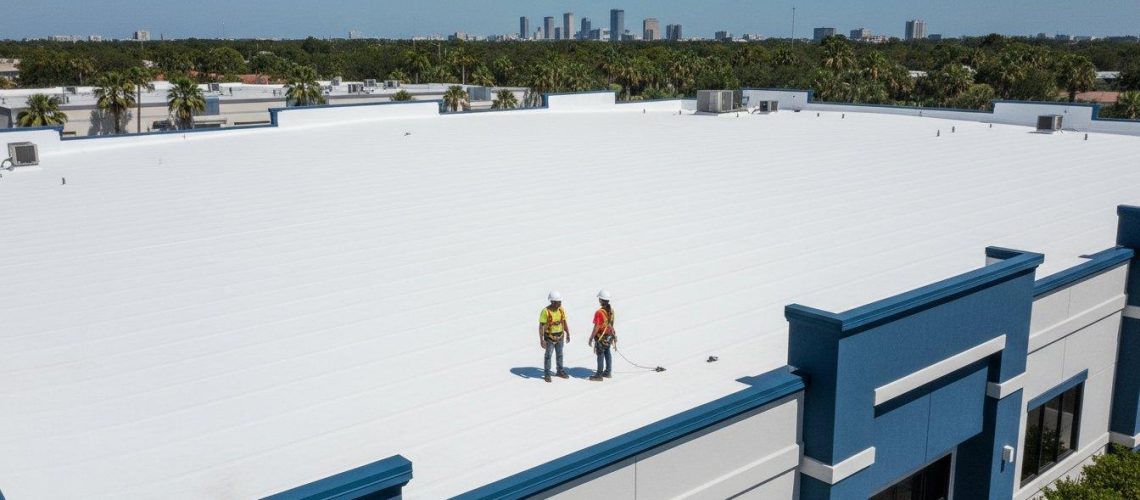

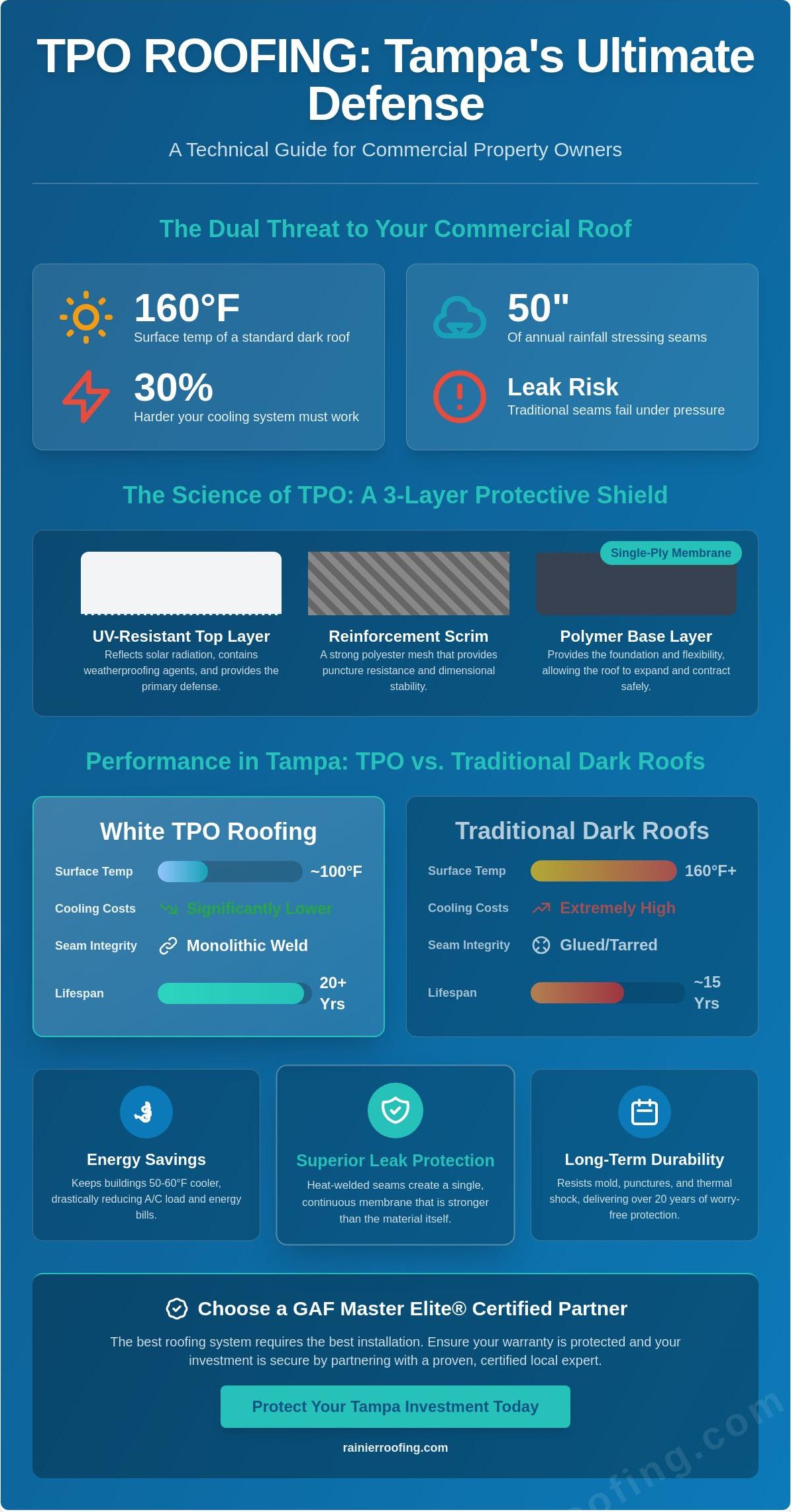
A standard dark roof in Tampa often hits 160 degrees during a typical July afternoon, which forces your cooling system to work 30 percent harder just to keep pace. At Rainier Roofing, we’ve watched these extreme temperatures degrade local commercial properties since 1987. You already realize that the combination of intense UV exposure and 50 inches of annual Florida rainfall puts an immense strain on your building. Investing in tpo flat roofing systems offers a proven way to defend your property against these specific climate challenges while significantly lowering your monthly overhead.
This guide provides the technical clarity you need to master the benefits of TPO, from its heat-reflective properties to its superior leak resistance. We’ll examine how these systems align with the 2026 Florida Building Code and compare their long-term performance against traditional materials. You’ll gain a clear roadmap for achieving 20 plus years of worry-free protection and a cooler, more efficient interior for your Tampa investment.
Key Takeaways
- Understand the three-layer composition of TPO membranes and why this single-ply solution has become the gold standard for Tampa’s commercial durability.
- Learn how the high Solar Reflectance Index (SRI) of white TPO works to neutralize the heat island effect and protect your building from Florida’s intense UV rays.
- Evaluate the performance of tpo flat roofing systems compared to modified bitumen to see how heat-welded seams provide superior protection against heavy tropical rainfall.
- Explore the critical steps of the professional installation process, from substrate preparation to creating a monolithic, waterproof surface for long-term security.
- Identify how to vet local contractors and why GAF Master Elite certification is essential for ensuring your commercial investment remains protected by a long-term warranty.
What Are TPO Flat Roofing Systems and Why Do Tampa Businesses Prefer Them?
Since 1987, Rainier Roofing has watched the Florida landscape evolve. We’ve seen materials come and go, but few have changed the industry like Thermoplastic Olefin (TPO). This single-ply roofing membrane is engineered for durability and high solar reflectivity. In a climate where the sun beats down on rooftops for over 240 days a year, tpo flat roofing systems provide a protective shield that older materials simply cannot match.
Tampa property owners are rapidly moving away from traditional “black” roofs, such as built-up roofing or older EPDM systems. These dark surfaces can reach temperatures of 150 degrees Fahrenheit or higher during a typical July afternoon. TPO serves as a modern alternative, reflecting UV rays back into the atmosphere rather than absorbing them into your building. This shift has become the standard for local businesses looking to secure their assets while managing the intense Florida heat.
The Core Components of a TPO Membrane
A TPO membrane isn’t just a single sheet of plastic; it’s a high-performance composite built in three distinct layers. The bottom layer provides the foundation, while the top layer contains the UV inhibitors and weatherproofing properties that protect your structure. Sandwiched between these is a polyester reinforcement scrim. This internal mesh is vital because it gives the membrane its puncture resistance and dimensional stability, ensuring it won’t shrink or warp as temperatures fluctuate.
The chemistry behind the material is what allows it to remain flexible over its entire lifespan. TPO is a blend of polypropylene and ethylene-propylene rubber. This specific formulation ensures the roof can expand and contract without cracking. Because the seams are heat-welded rather than glued, they form a monolithic bond that is often stronger than the membrane itself. This creates a watertight seal that is essential during the heavy downpours common in Hillsborough County.
Why TPO is the Standard for Modern Tampa Commercial Roofing
The transition from Modified Bitumen to single-ply systems has accelerated over the last 15 years. Today, TPO accounts for over 50% of new commercial roofing installations in the United States. For large-scale Tampa industrial warehouses and retail centers, the speed of installation is a significant advantage. Our teams can cover vast areas efficiently, which minimizes the disruption to your daily business operations.
Choosing TPO means investing in the long-term health of your property. It resists mold growth, dirt accumulation, and common pollutants that often degrade other roofing types. If you are managing a property in the Bay Area, understanding your options for commercial roofing tampa is the first step toward a worry-free facility. Tpo flat roofing systems offer the reliability and protection that local business owners need to face every storm season with confidence.
The Science of Cool: How TPO Membranes Combat Florida’s Intense Heat and UV
Tampa property owners face a relentless battle against the sun. TPO flat roofing systems provide a scientific advantage in this environment by utilizing high Solar Reflectance Index (SRI) ratings. While a standard dark roof can reach temperatures of 150 degrees on a typical July afternoon, a white TPO membrane stays significantly cooler. Data from the Cool Roof Rating Council shows that highly reflective surfaces can remain up to 50 or 60 degrees cooler than traditional materials. This temperature difference is vital for mitigating the “Heat Island Effect” in urban centers like downtown Tampa or the Westshore District, where concentrated hardscapes trap heat and drive up local temperatures by as much as 7 degrees.
Beyond simple reflection, TPO protects the structural integrity of your building by preventing thermal shock. This phenomenon occurs when a roof expands under the midday sun and then contracts rapidly during a sudden 4:00 PM Florida thunderstorm. Over time, this cycle creates cracks and splits in older roofing materials. TPO’s flexible chemical composition allows it to expand and contract without losing its shape or seal. Since 1987, we’ve observed that roofs capable of managing these rapid temperature swings require fewer repairs and offer better long-term security for the family or business inside.
Reducing AC Load and Energy Expenditures
A reflective TPO surface serves as a barrier that prevents heat from “bridging” into your building’s interior. For large-scale Tampa warehouses and retail centers, switching to a high-performance TPO system often results in a 15% to 20% reduction in peak cooling demand. This efficiency does more than just lower your monthly power bill. It also protects your HVAC equipment. When the air surrounding rooftop units is cooler, the machinery doesn’t have to work as hard to reach your desired temperature, which can extend the lifespan of your expensive AC components by several years.
UV Degradation: TPO’s Defense Against the Florida Sun
Florida’s UV index frequently hits 10 or higher, which can cause older roofing materials to “chalk” or become brittle. TPO membranes are engineered with UV-resistant stabilizers that maintain the material’s integrity even under constant radiation. While a 60 mil membrane is the industry standard, we often recommend 80 mil thickness for properties with high exposure. We frequently utilize GAF EverGuard TPO because its specific formulation is designed to resist the long-term weathering common in our region. If you’re worried about how the sun is affecting your current roof, our specialists can provide a detailed assessment of your system’s remaining life. This proactive approach is part of the Rainier Difference, ensuring your property remains a safe haven regardless of the weather.
TPO vs. Modified Bitumen: Which Flat Roof System Wins in the Tampa Bay Climate?
Choosing between these two systems often comes down to your building’s specific daily demands. Modified Bitumen, or Mod-Bit, relies on multiple layers of asphalt-soaked fabric. It’s a heavy-duty option that has protected Florida buildings for decades. However, tpo flat roofing systems offer a modern approach by focusing on solar reflectance and seam integrity. While Mod-Bit is thick, TPO is smart. It reflects up to 80% of solar radiation, keeping your roof deck temperatures significantly lower during July’s 95-degree peaks.
Seam failure is the primary cause of flat roof leaks in Hillsborough County. Mod-Bit seams are bonded with adhesives or torches, which can weaken over time as the building shifts. TPO seams are heat-welded to create a single, monolithic sheet. This physical bond is much stronger than the material itself. It won’t pull apart under the stress of rapid temperature changes. Rainier Roofing has seen this difference firsthand since 1987; welded seams simply handle our thermal expansion better than glued ones.
- Energy Efficiency: TPO is the clear winner for “cool roof” ratings, reducing AC strain.
- Weight: TPO is significantly lighter, putting less stress on your building’s structural components.
- Redundancy: Mod-Bit offers multiple layers, providing a safety net if the top layer is punctured.
Performance in High Humidity and Standing Water
Tampa receives an average of 51 inches of rain annually, mostly during intense summer thunderstorms. TPO’s welded seams are superior for these conditions because they don’t rely on chemical bonds that can degrade in standing water. In Mod-Bit systems, high humidity can trap moisture between layers during installation, leading to delamination and blisters. Over a 20-year lifecycle, TPO systems generally cost 20% less to maintain than Modified Bitumen because they don’t require the frequent resealing of seams or reflective coatings.
Foot Traffic and Durability Considerations
If your roof houses heavy HVAC units that require monthly servicing, Modified Bitumen might be the better choice. Its thick, multi-ply construction handles dropped tools and heavy foot traffic with ease. You can still use tpo flat roofing systems in these high-service areas, but you must install dedicated walkway pads to prevent punctures. To ensure you select the right material for your specific layout, it’s vital to partner with an experienced commercial roof company that understands the “Rainier Difference” in craftsmanship and material selection. We focus on protecting your long-term investment, not just the quick fix.
Step-by-Step: The TPO Installation Process and Essential Florida Maintenance
The longevity of tpo flat roofing systems depends entirely on the precision of the initial install. At Rainier Roofing, we’ve refined our process since 1987 to address Tampa’s specific climate challenges. We begin by preparing the substrate, ensuring every inch is bone-dry and free of debris. Our team then secures high-quality insulation boards using heavy-duty fasteners. This foundation must be perfectly level to prevent “ponding,” where water sits for more than 48 hours and degrades the membrane.
The defining moment of the installation is the heat-welding process. We use robotic hot-air welders to fuse the seams at temperatures reaching 800 degrees Fahrenheit. This doesn’t just glue the sheets together; it creates a single, monolithic waterproof surface. We pay special attention to flashing and detailing around HVAC units and parapet walls. These are the most common failure points on Florida roofs, so we reinforce them with custom-cut membrane boots. Once the membrane is set, we perform a rigorous post-installation inspection. This includes probing every inch of the seams and verifying that the drainage system clears water efficiently.
Meeting Florida Building Code and Wind-Uplift Standards
Tampa property owners must adhere to the ASCE 7-22 wind load requirements. These standards dictate how a roof reacts to the intense pressure changes during a tropical storm. We calculate fastener density based on your building’s height and proximity to the coast. For superior wind resistance, we often recommend induction welding, specifically the RhinoBond system. This method bonds the membrane directly to the plates beneath it without piercing the top layer. It distributes wind loads more evenly across the deck, providing a 50% increase in uplift resistance compared to traditional mechanical attachment.
Preventative Maintenance for Tampa Flat Roofs
Florida’s humidity and UV radiation are relentless. You should schedule professional inspections twice a year, specifically in April before hurricane season starts and in November after it ends. These visits allow us to identify minor punctures or clogged drains before they turn into emergencies. Keeping the surface clean is also vital for your energy bills. A dirty roof loses its Solar Reflectance Index (SRI) rating, absorbing heat rather than reflecting it. If you notice standing water or loose flashing between inspections, you can learn more about professional intervention in our guide to roof repair tampa fl.
Protect your investment with a team that understands the local climate. Contact Rainier Roofing today to schedule a detailed inspection for your tpo flat roofing systems.
Selecting Your TPO Partner: Why Local Expertise Matters for Your Tampa Commercial Roof
Selecting a contractor for tpo flat roofing systems requires more than a quick search. You need a partner who understands the specific atmospheric demands of the Gulf Coast. Since 1987, Rainier Roofing has built a reputation on being a guardian for local businesses. The surge of “storm chasers” has increased significantly since 2008, making it harder for Tampa owners to distinguish between transient crews and legacy businesses. These out-of-state entities often arrive after major weather events but vanish before the first warranty claim arises. Choosing an established local expert ensures that your investment remains protected by someone who lives in your community.
We provide the Rainier Difference through meticulous craftsmanship and elite credentials. Only 2% of roofing contractors achieve GAF Master Elite status. This certification isn’t just a badge; it’s a requirement for the high-level commercial warranty backing that protects your capital. Transparency starts with the estimate. We don’t provide vague figures. Our comprehensive estimates for tpo flat roofing systems break down every cost, from deck preparation to insulation thickness. This clarity prevents the hidden fees that 65% of property owners report experiencing with less reputable contractors.
The Importance of Manufacturer Warranties
The GAF EverGuard Diamond Pledge NDL (No Dollar Limit) warranty represents the peak of protection for your facility. Standard labor warranties only cover the installer’s mistakes, but if that installer goes out of business, the paperwork becomes worthless. An NDL warranty backed by GAF ensures the manufacturer covers both materials and labor costs for repairs, regardless of the total price. Rainier Roofing secures these premium coverages because our team consistently meets the strict installation standards required for this level of manufacturer backing.
Why Local Knowledge Trumps National Chains
National chains often struggle with the granular details of Florida building codes. We’ve managed permitting processes in Hillsborough and Pasco counties for nearly four decades. We know the specific inspectors and the local wind-load requirements that a technician from out of state might miss. If a storm hits, our local crews provide emergency tarping within hours. You won’t wait for a team to fly in from another region while your inventory is at risk. You can learn more about why this status matters by visiting our guide on the gaf master elite roofer tampa designation.
Reliability isn’t just a promise; it’s our history. By choosing a partner with deep roots in Tampa, you’re ensuring that your commercial roof remains a worry-free asset for the next 20 years and beyond.
Protect Your Investment with a Future-Ready Tampa Roof
Choosing the right protection for your commercial property shouldn’t be a source of stress. TPO flat roofing systems provide a scientifically proven solution for Tampa’s 90-degree summer days and intense UV exposure. By selecting a membrane specifically engineered for Florida’s High-Velocity Hurricane Zone (HVHZ) requirements, you’re investing in long-term security and energy efficiency. Our team has maintained an A+ BBB Rating while serving the local community, ensuring every installation meets the highest standards of structural integrity.
Rainier Roofing has been GAF Master Elite Certified since 2008. We understand the Rainier Difference means more than just a new roof; it’s about providing the peace of mind your business deserves. We’ve been a family-owned fixture in the Tampa Bay area since 1987, and we’re ready to help you navigate the unique challenges of our coastal climate. Don’t leave your property’s safety to chance when you can work with a seasoned expert who understands local references and requirements. Get Your Free TPO Commercial Roof Estimate from Rainier Roofing Today. We look forward to protecting what matters most to you for years to come.
Frequently Asked Questions
How long does a TPO flat roofing system last in Florida?
A high-quality TPO flat roofing system typically lasts between 20 and 30 years in the Florida climate. While the intense UV radiation in Tampa can degrade lesser materials, TPO’s heat-welded seams provide a durable barrier against 100-degree summer days. Regular inspections every 12 months ensure the membrane remains flexible and secure. This longevity provides the long-term security our neighbors have trusted Rainier Roofing to deliver since 1987.
Is TPO roofing puncture-resistant enough for maintenance workers?
TPO roofing is highly puncture-resistant, but its performance depends heavily on the membrane thickness you choose. We recommend a 60 mil or 80 mil membrane for roofs that see frequent foot traffic from HVAC technicians. Industry tests show that reinforced TPO can withstand impacts that would tear older EPDM systems. Choosing a thicker membrane ensures your property stays protected even when maintenance workers are active on your roof.
What is the average cost of TPO roofing per square foot in Tampa?
According to 2024 industry reports from Forbes Home, the average cost for TPO roofing ranges from $5.00 to $14.00 per square foot. Total project expenses depend on the roof size, existing deck condition, and the insulation R-value required by the 2023 Florida Building Code. We provide detailed, transparent estimates so you understand exactly how your investment secures your property without any hidden surprises or unexpected fees during the installation process.
Can TPO roofing be installed over an existing flat roof?
You can often install a TPO flat roofing system over an existing roof if the underlying structure is dry and structurally sound. The Florida Building Code generally allows for a maximum of two roofing layers before a complete tear-off is mandatory. We perform a moisture scan to identify any trapped water before proceeding with an overlay. This approach can save you up to 20 percent on labor costs while still providing a fresh surface.
How does TPO roofing perform during a Florida hurricane?
TPO roofing performs exceptionally well during Florida hurricanes because the seams are heat-welded to be stronger than the membrane itself. When installed to meet the 150 mph wind uplift requirements of the Tampa area, these systems resist peeling and water intrusion. Our team focuses on perimeter flashing and secure fastening patterns. This meticulous craftsmanship ensures your roof remains intact and your family stays dry when the next major tropical storm hits.
Does TPO roofing require special cleaning to stay reflective?
TPO membranes require periodic cleaning with a soft-bristle brush and non-abrasive soap to maintain their high solar reflectance. Accumulated dirt and biological growth can reduce a roof’s reflectivity from its initial 87 percent rating down to 50 percent within three years. Keeping the surface white helps lower your cooling costs by reflecting up to 80 percent of solar radiation. We suggest a light cleaning every 12 months to maximize your energy savings.
What is the difference between 45 mil and 60 mil TPO membranes?
The primary difference is that 60 mil TPO is 33 percent thicker than 45 mil, offering better UV resistance and a longer service life. While 45 mil is a budget-friendly option, 60 mil membranes typically include longer manufacturer warranties, often extending to 20 or 25 years. We usually recommend the 60 mil option for Tampa property owners. It provides a more robust defense against the physical wear and thermal expansion common here.
Is TPO better than PVC for commercial kitchens or restaurants?
PVC is generally a better choice than TPO for commercial kitchens or restaurants because it is specifically engineered to resist animal fats and grease. TPO membranes can swell or degrade when exposed to the oils exhausted from kitchen vents over time. If your facility processes food daily, the chemical resistance of PVC provides the necessary protection to prevent premature roof failure. We help you choose the right material based on your operations.