
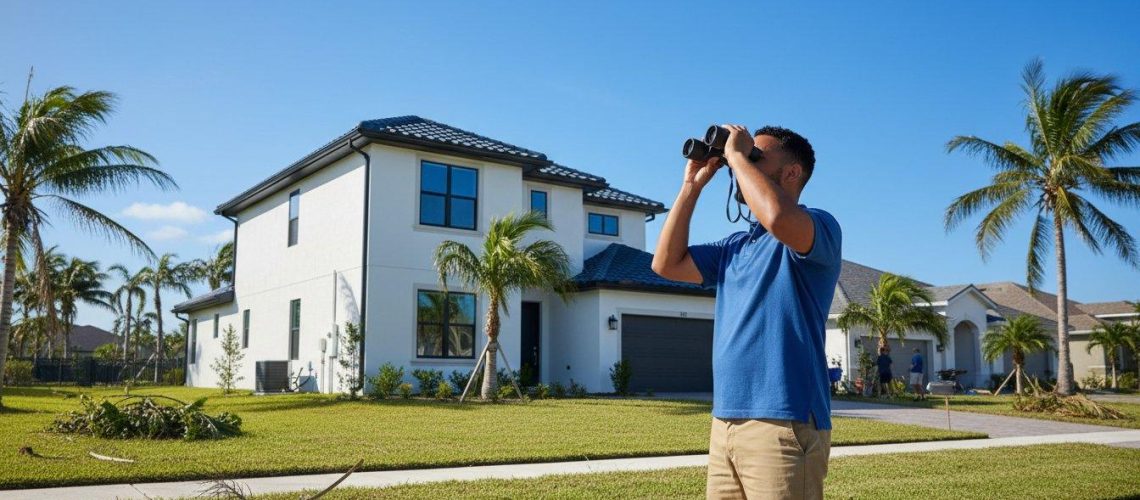

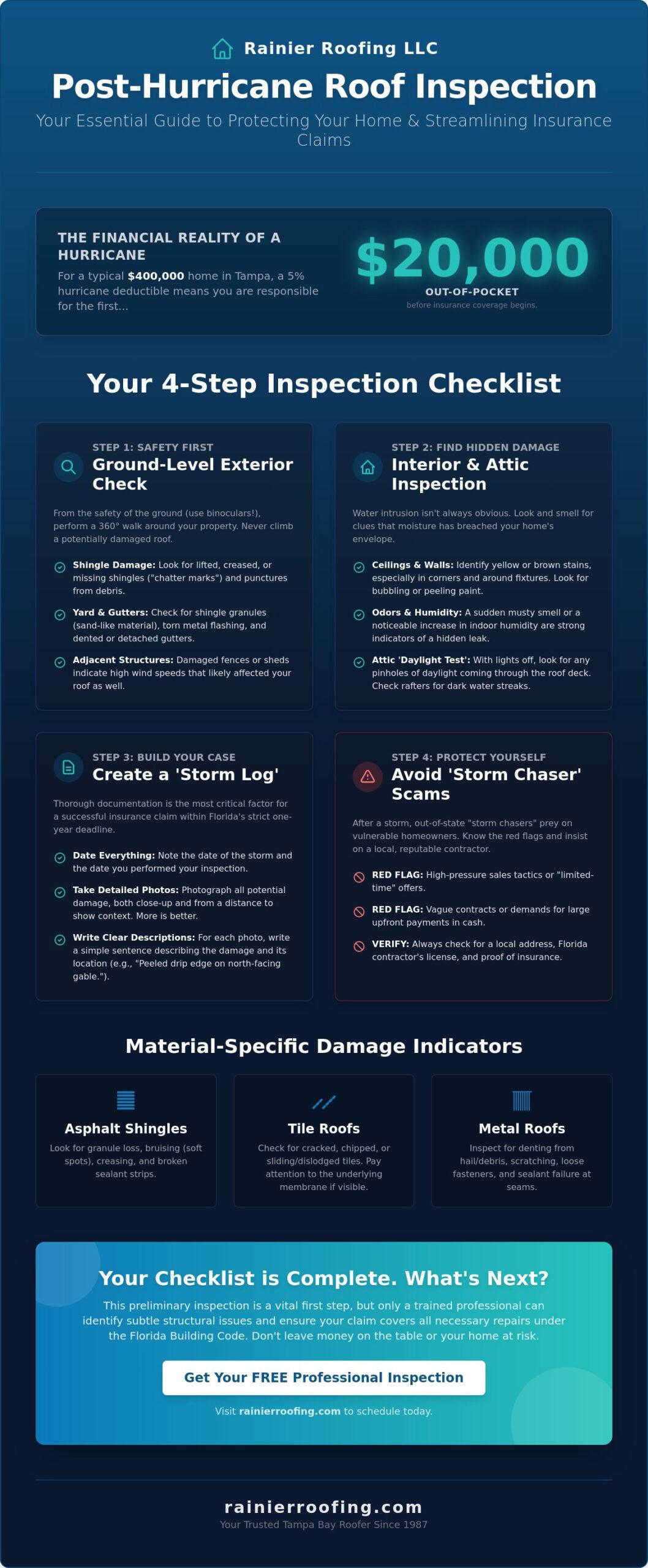
Did you know that for a $400,000 home in Tampa, a 5% hurricane deductible means you’re responsible for $20,000 before your insurance coverage even begins? Facing that kind of financial reality is stressful, especially when you’re also worrying about out-of-state “storm chasers” or complex insurance deadlines. It’s completely normal to feel anxious about whether your roof survived the latest storm or if hidden damage is quietly devaluing your home. That’s why having a reliable post-hurricane roof inspection checklist is your first line of defense in protecting your family’s biggest investment.
At Rainier Roofing LLC, we’ve stood by our neighbors since 1987. We know that the right documentation makes all the difference when filing a claim within Florida’s strict one-year deadline. We’ll show you exactly how to spot signs of wind uplift and hail impact from the safety of the ground. You’ll learn how to identify damage that qualifies for repair under the Florida Building Code’s 25% rule and how to gather the evidence your adjuster needs. This guide gives you the Rainier Roofing LLC Difference approach to storm recovery; it ensures you move forward with confidence, clear documentation, and the peace of mind you deserve.
Key Takeaways
- Conduct a safe, ground-level perimeter walk using binoculars to identify high-peak damage without the risk of climbing a ladder.
- Identify hidden interior warning signs like ceiling staining and attic moisture streaks that often signal structural compromise after a major storm.
- Follow our comprehensive post-hurricane roof inspection checklist to recognize specific damage indicators for asphalt, tile, and metal roofing systems.
- Protect your home’s value by creating a detailed “Storm Log” and photo documentation that streamlines the insurance claim process.
- Learn how to verify local credentials to avoid out-of-state “storm chasers” and ensure your repairs meet the latest Florida Building Code standards.
Step 1: The ‘Safety-First’ Ground-Level Perimeter Walk
Your safety is the absolute priority after a major storm passes through the Tampa Bay area. Before you begin your post-hurricane roof inspection checklist, you must wait for official “all-clear” notices from local authorities. Even if the sun is shining, hazards like downed power lines, unstable trees, and flooded areas pose significant risks. At Rainier Roofing, we’ve helped families recover from storms since 1987, and we’ve seen how hidden dangers can lead to accidents long after the wind dies down. Once it’s safe to step outside, keep your feet firmly on the ground. You don’t need a ladder to identify major issues; in fact, we recommend staying off the roof entirely until a professional can verify its structural integrity.
Grab a pair of high-powered binoculars and perform a slow, 360-degree walk around your property. Focus your attention on the high peaks, ridges, and valleys where wind force is often the strongest. Understanding the effects of wind on structures helps you identify why certain areas of your roof are more vulnerable than others. Look for “chatter” marks, which appear as slightly lifted or creased shingle edges. These marks indicate wind uplift, where the wind has broken the sealant strip and physically lifted the shingle. You should also check for punctures caused by flying debris or fallen tree limbs. Even a small hole in the roofing membrane can lead to significant interior water damage during the typical Florida afternoon rains that follow a hurricane.
What to Look for in Your Yard and Gutters
The ground often tells the story of what happened on the roof. Search your landscaping for shingle “crumbs” or heavy granule loss. If you see piles of sand-like material in your downspout splash blocks, your shingles have lost their protective UV layer and are now vulnerable to the intense Florida heat. Scan the yard for pieces of metal flashing or fascia boards that may have been torn away. It’s also vital to note any dented or detached seamless gutter systems. When gutters are pulled away from the roofline, they can no longer direct water away from your home, which often leads to expensive foundation issues and soil erosion.
Spotting Damage on Adjacent Structures
Your fences and sheds act as excellent proxies for the wind speeds your roof endured. If a sturdy wooden fence has been knocked over or a shed roof is missing, your main home likely sustained similar force. Pay close attention to the drip edge, the metal strip installed along the roof’s perimeter. High winds often cause this metal to peel or bend upward. To help your insurance adjuster, write a single, clear sentence describing its current state. For example: “The metal drip edge on the north-facing gable shows approximately three inches of separation from the fascia board.” This simple baseline documentation is a key part of the Rainier Difference, ensuring you have the facts ready when it’s time to file your claim.
Step 2: Interior and Attic Inspection for Hidden Intrusion
Once you finish your exterior walk, the next phase of your post-hurricane roof inspection checklist moves inside. Many homeowners assume that if no shingles are missing, the home is watertight. This is a dangerous misconception. Wind-driven rain can penetrate even the smallest gaps in flashing or underlayment during a storm’s peak. Start your search on the highest floor of your home. Carefully examine every ceiling corner and the areas around light fixtures for yellow or brown staining. If you notice bubbling paint on the walls, water is likely traveling behind the drywall. This trapped moisture quickly leads to mold growth in the humid Florida climate.
Your nose is often as effective as your eyes when detecting storm damage. A sudden musty odor or a noticeable spike in indoor humidity suggests that moisture has breached your home’s envelope. Following official government safety advice, ensure you have stable footing and adequate lighting before entering your attic space. A high-powered flashlight is your best tool here. Shine it along the rafters and look for dark streaks or damp spots. If you’re unsure about what you’re seeing, a professional roof assessment can provide the clarity you need to move forward with an insurance claim.
The Attic ‘Daylight Test’
This is a critical step that many basic guides overlook. Turn off all attic lights and allow your eyes to adjust to the darkness. Look for pinpricks of sunlight coming through the roof deck. If light can get in, water can too. Pay close attention to high-risk areas like vents, chimneys, and skylight installations. While you’re there, check your insulation. Wet or matted insulation loses its R-value immediately upon contact with water, which will drive up your cooling costs during the 90-degree days that follow a storm.
Structural Integrity Checks
High wind gusts don’t just move shingles; they can shift the very bones of your home. Inspect your rafters for any new cracks or splintering that may have occurred during peak wind loads. Check the sheathing, the wood boards visible between the rafters, for signs of sagging or detachment. If you find dampness, take clear photos that include a time and date stamp. According to the Florida Department of Financial Services, thorough documentation is a primary factor in successfully navigating the 60-day window insurers have to pay or deny a claim. This level of detail ensures your proof of loss is undeniable when the adjuster arrives.
Step 3: Material-Specific Damage Indicators
Rainier Roofing has protected Tampa Bay families since 1987, and we know that a one-size-fits-all approach to storm recovery doesn’t work. Different roofing materials react uniquely to the extreme pressures of a hurricane. Adding material-specific signs to your post-hurricane roof inspection checklist ensures you don’t overlook subtle issues that could lead to structural failure. While some damage is obvious, like a missing section of shingles, other signs are much more discreet and require a trained eye or steady binoculars to identify.
| Roofing Material | Primary Damage Indicator | Hidden Risk Factor |
|---|---|---|
| Asphalt Shingles | Missing or torn tabs | Bruising and granule loss |
| Tile Roofing | Cracked or shifted tiles | UV damage to underlayment |
| Metal Roofing | Panel separation | Oil canning and loose screws |
Asphalt shingles often exhibit “bruising” after a storm. These are soft spots where debris or hail impacted the surface, crushing the internal fiberglass mat. If you see the black underlayment exposed where a tab used to be, your home’s primary shield is compromised. For tile roofing, look for “slid” tiles that have moved down the roof slope. Capillary action occurs when water is forced upward and under these shifted tiles by high-velocity winds, bypassing the primary barrier and soaking the wood deck. Metal systems are incredibly resilient, but they aren’t invincible. Look for “oil canning,” which is a visible waviness in the flat areas of the panels caused by extreme atmospheric pressure changes during a hurricane.
Special Considerations for GAF Shingles
If your home features GAF Timberline HDZ shingles, check the proprietary StrikeZone nailing area for any signs of fastener pull-through. While these shingles are engineered for high-wind resistance, extreme gusts can occasionally stress the seal. Look for “scouring” where high-speed rain has stripped the protective ceramic granules, leaving the asphalt exposed to the sun’s rays. This accelerated wear can drastically shorten the lifespan of your roof if not addressed quickly.
Tile and Metal Specific Hazards
Search for “star cracks” on your concrete and clay tile roofing. These small, radiating fractures are caused by flying debris and are difficult to see from the ground. On metal roofs, check the seams for gaps where wind may have compromised the mechanical lock. Loosened fasteners are also common; even a slightly backed-out screw can allow water to seep into the decking, leading to rot that remains hidden until the next major rain event.
Step 4: Documentation and Avoiding ‘Storm Chaser’ Scams
Thorough documentation is the bridge between identifying damage and receiving a fair settlement. As you complete your post-hurricane roof inspection checklist, you must act as your own forensic investigator. Your insurance company requires “proof of loss,” and the burden of proof rests on you. Start by taking wide-angle photos of your entire home from the street and backyard to provide context. Then, move in for close-up shots of the specific damage points you identified in previous steps. If you see a lifted shingle or a cracked tile, take multiple photos from different angles to capture the depth of the issue.
Create a “Storm Log” that notes the exact date, time, and duration of the peak hurricane winds in your specific neighborhood. This data often proves invaluable if an adjuster claims the damage is due to wear and tear rather than the specific storm event. Keep every receipt for temporary mitigation efforts, including emergency roof tarping. Under your policy, you have a duty to prevent further damage; these costs are typically reimbursable if you provide clear documentation and original receipts.
Be extremely wary of contractors who arrive unannounced at your door offering “free” roofs or claiming they can “waive your deductible.” In Florida, waiving a deductible is insurance fraud. These “storm chasers” often travel from state to state following disaster declarations. They lack local roots and are notoriously difficult to find if a warranty issue arises six months later. They often use high-pressure tactics to get you to sign paperwork before you’ve even spoken to your insurance company.
The Danger of ‘Assignment of Benefits’ (AOB)
A major legal trap in Florida is the “Assignment of Benefits” (AOB) contract. When you sign an AOB, you give up your right to manage your own claim and allow the contractor to deal directly with the insurance company. This often leads to legal disputes that delay your repairs for months or years. Always verify that you are working with licensed roofing contractors in Florida who maintain a permanent, local physical office. Check for local license plates and ask for a copy of their Florida contractor’s license before allowing anyone onto your roof.
Preparing for the Insurance Adjuster
Prepare for your meeting with the insurance adjuster by gathering any pre-storm photos you have on your phone or computer. This “before and after” contrast is the most powerful evidence you can provide. Create a concise list of every damage point you found so you don’t miss anything during the physical walk-through. Remember that Florida law now requires you to file an initial claim within one year of the date of loss. Missing this window can result in a total denial of coverage, regardless of the severity of the damage. If you need assistance documenting your home’s condition, schedule a professional storm damage assessment with our local team today.
Step 5: Why a Professional Inspection is Non-Negotiable
Completing your own post-hurricane roof inspection checklist is a vital first step in protecting your home, but it cannot replace the precision of a professional evaluation. While binoculars help you spot obvious issues from the safety of the ground, many forms of hurricane damage remain invisible to the untrained eye. At Rainier Roofing, we’ve served the Tampa Bay community since 1987. We understand that what looks like a minor shingle lift today can evolve into a catastrophic leak during the next heavy rain. If you want to ensure your home remains secure, you need the technical expertise that only a seasoned local contractor provides.
Our team utilizes advanced technology to identify hidden structural compromises. We deploy high-resolution drones to capture angles that are impossible to see from a ladder, and we use infrared moisture meters to detect water trapped behind your walls or under your roofing membrane. This level of detail is essential for your insurance claim. A professional report serves as your definitive “proof of loss,” providing the technical data required to overturn initial insurance denials. If your adjuster misses a specific impact point, our documentation ensures your carrier has the facts needed to pay your claim fairly.
The GAF Master Elite Advantage
Maintaining your manufacturer warranty is critical after a major weather event. If an uncertified contractor performs even minor repairs on your roof, you may inadvertently void your long-term protection. As a GAF Master Elite roofer Tampa, we belong to the top 2% of contractors nationwide who meet GAF’s rigorous standards for craftsmanship and reliability. This certification allows us to offer the Golden Pledge warranty, which provides maximum protection in storm-prone regions. If your roof needs a full replacement under the Florida 25% rule, our status ensures your new system is backed by the strongest warranties in the industry.
Next Steps: Scheduling Your Free Estimate
Don’t wait for a ceiling stain to appear before taking action. Florida law requires you to notify your insurer within one year of the date of loss, but the most successful claims are filed immediately after the storm. When you call Rainier Roofing, we prioritize post-storm assessments to get your home back to its original condition as quickly as possible. Our professional 21-point roof inspection covers everything from the structural rafters in your attic to the integrity of your seamless gutter systems. We provide a clear, honest path forward without any high-pressure sales tactics. Contact Rainier Roofing today for your professional post-hurricane inspection.
Take the First Step Toward Storm Recovery
Your home is more than just a structure; it’s the foundation of your family’s security. Following a systematic post-hurricane roof inspection checklist allows you to identify critical issues like wind uplift or moisture intrusion before they become costly emergencies. By focusing on ground-level safety and thorough documentation, you protect your insurance rights and ensure your property’s value remains intact. This proactive approach is the best way to avoid the stress of unexpected leaks or insurance claim denials.
While a personal assessment provides a vital starting point, true peace of mind comes from professional verification. Rainier Roofing has been family-owned and operated since 2008, bringing over 15 years of dedicated Tampa Bay experience to every home we protect. As a GAF Master Elite Certified contractor, we offer the technical expertise and neighborly trust you need to navigate the aftermath of Florida’s severe weather. We’re ready to help you move from uncertainty to a clear, documented plan for restoration.
Don’t let hidden damage compromise your roof’s longevity. Schedule Your Professional Post-Storm Inspection with Rainier Roofing today to receive a comprehensive 21-point assessment. We’ll stand by you to ensure your home remains a safe haven for years to come.
Frequently Asked Questions
How long do I have to file a roof insurance claim after a hurricane in Florida?
You must notify your insurance provider within one year of the date of loss to remain eligible for coverage. This deadline was changed from two years in December 2022 to help speed up the recovery process across the state. If you discover hidden issues after the initial filing, you have up to 18 months from the storm date to submit a supplemental claim. Maintaining a detailed post-hurricane roof inspection checklist ensures you have the documentation ready to meet these strict legal windows.
Can I do my own roof repairs after a storm to save money?
We strongly advise against DIY repairs because they often void manufacturer warranties and may not comply with the 8th Edition of the Florida Building Code. In Hillsborough County, residential roofing permits start at approximately $177 and require professional inspections to verify wind resistance standards. Additionally, if your repairs exceed 25% of the total roof area within a 12-month period, the entire system must be replaced to meet current 2026 codes. Professional repairs ensure your home remains insurable and safe.
What is the difference between wind damage and hail damage on a roof?
Wind damage typically appears as uplift, where shingles are creased, folded, or completely torn away from the sealant strip. Hail damage is different; it creates “bruising” or circular indentations that crush the internal fiberglass mat of a shingle or crack a concrete tile. While wind damage is often concentrated on ridges and eaves, hail impacts are usually scattered across the entire roof surface. Both types of damage compromise the roof’s integrity and require a professional assessment to prevent wood rot.
Will my insurance premium go up if I file a claim for hurricane damage?
Florida law generally prohibits insurance companies from canceling your policy or raising your individual rates solely because you filed a claim for an “Act of God,” such as a hurricane. While insurers may adjust regional rates based on the total volume of storm losses in Tampa, filing a legitimate claim for damage is your right as a policyholder. It’s better to file a claim now than to pay for a full replacement out-of-pocket later because a minor leak was ignored.
What should I do if my roof is leaking right now after the storm?
You have a legal duty to mitigate further damage, so you must act quickly to stop water from entering your home. Contact a reputable local roofer for emergency roof tarping to protect your rafters and interior ceilings from mold growth. Save the receipt for this service, as most insurance policies reimburse homeowners for the cost of temporary repairs. Taking these steps immediately shows your insurer that you’re acting responsibly to protect the property.
How do I know if a roofing contractor is actually local to Tampa?
Check for a permanent physical office address in the Tampa Bay area and verify their Florida contractor’s license through the Department of Business and Professional Regulation. Local companies like Rainier Roofing have deep community roots; we’ve stood the test of time and weather since 1987. Be cautious of contractors with out-of-state license plates or those who can’t provide local references from the last 12 months. Local experts understand Florida’s unique heat and humidity challenges better than “storm chasers.”
Is a ‘free roof’ offer from a contractor legal in Florida?
No, any offer to “waive” or “cover” your insurance deductible is illegal and constitutes insurance fraud in the state of Florida. Your hurricane deductible is typically a set percentage, ranging from 2% to 5% of your home’s insured value, and it must be paid as part of the claim process. Contractors who offer to bypass this requirement are often cutting corners on materials or labor. Working with a transparent, family-owned business ensures your project follows all state laws and insurance regulations.
What happens if the insurance adjuster misses damage that my roofer found?
If an adjuster overlooks damage, your roofing contractor can provide a supplemental report with photos and measurements to request a re-evaluation. This is a common part of the process, and you have 18 months from the date of loss to file for these additional funds. Using a post-hurricane roof inspection checklist during the initial walk-through helps ensure no damage is missed. Our team provides the professional “proof of loss” documentation needed to help adjusters see the full scope of the required repairs.