

The vents on your roof might look like they are letting Florida’s heat inside, but without them, your home is effectively creating its own internal rainstorm. Stagnant, humid air trapped in your attic can reach temperatures that literally bake your shingles from the bottom up. Most homeowners in Tampa and Brandon understand that the summer sun is relentless. You likely feel the strain on your AC every afternoon and worry about the hidden mold growth that thrives in our tropical climate. It’s a stressful cycle, but recognizing the attic ventilation importance in Florida homes can prevent a premature roof failure and protect your family’s peace of mind.
Proper airflow acts as a pressure-balanced defense system, protecting your structural integrity and keeping your manufacturer warranties intact under the 2026 Florida Building Code. We’ll explore how a balanced 1:150 ventilation ratio saves your roof from moisture damage and helps it reach its full 50 year potential. You will discover practical ways to lower your cooling costs while maintaining a healthy, mold-free environment. This guide provides the professional insight you need to ensure your home remains a safe, efficient sanctuary for decades to come.
Key Takeaways
- Learn how a balanced intake and exhaust system allows your attic to breathe, preventing the trapped humidity that leads to structural decay.
- Understand the attic ventilation importance in Florida homes to protect your shingles from thermal shock when attic temperatures soar past 150 degrees.
- Discover how to calculate your home’s Net Free Area requirements to comply with the 1:300 ratio mandated by the 2026 Florida Building Code.
- Recognize the common warning signs of poor airflow, including unusually high indoor temperatures and the appearance of dark mold spots in your attic.
- See how proper ventilation safeguards your long term investment by ensuring your GAF shingle warranty remains fully protected for its entire lifespan.
What is Attic Ventilation and Why is it Different in Florida?
Before diving into the technical details of roof maintenance, we need to understand the basics of the space directly above your head. What is an Attic? In its simplest form, it’s the area between your ceiling and the roof deck. Attic ventilation is a balanced system of intake and exhaust vents that allows air to circulate naturally through this space. This process is vital because it prevents the air from becoming stagnant and superheated. The attic ventilation importance in Florida homes cannot be overstated, as our local climate creates unique stressors that northern homes simply don’t face.
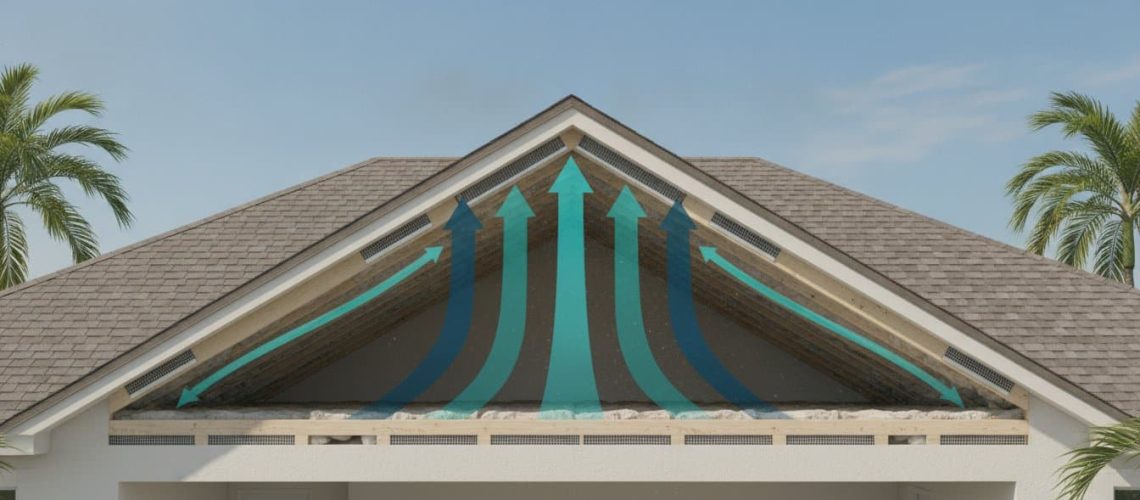
Think of your roof like a set of lungs. For the system to work, it must breathe. Fresh, cooler air enters through the eaves at the lowest point of the roof. As this air warms up, it naturally rises and exits through vents located at the peak or ridge. This continuous cycle flushes out heat and moisture before they can settle into your insulation or wooden rafters. Without this flow, your attic becomes a pressurized box of hot, wet air that can damage your home from the inside out.
In 2026, modern home construction is more airtight than ever to meet strict energy efficiency standards. While this is excellent for your utility bills, it means your home doesn’t leak air like older builds did. This makes active, intentional ventilation more critical than ever. If your attic is sealed too tightly without a dedicated path for airflow, moisture generated from daily activities like showering and cooking has nowhere to go. It stays trapped, leading to long term structural issues that are expensive to fix.
The Balance of Intake and Exhaust
A functional system requires a precise balance between intake and exhaust. Intake vents, often found in the soffits, bring in fresh air from the bottom. Exhaust vents, such as ridge vents or off-ridge vents, let the stale air escape at the top. If you have too much exhaust and not enough intake, the system may create a vacuum. This pressure imbalance can actually pull conditioned air out of your living space through recessed lights or ceiling cracks, forcing your AC to work much harder and driving up your costs.
Tampa Bay’s Micro-Climate Challenges
Homes in Bradenton and Wesley Chapel deal with humidity levels that frequently exceed 90%. This creates high vapor pressure, which pushes moisture into every available crevice. Attic ventilation is a pressure-balanced system for moisture removal. In areas like Odessa or Lutz, heavy morning dew and salt air can also accelerate the corrosion of metal components if airflow is restricted. We see the attic ventilation importance in Florida homes every day when we inspect roofs that have suffered from internal rain caused by our tropical environment. Keeping that air moving is the only way to protect your home’s foundation from these invisible threats.
The Silent Roof Killers: Heat and Moisture Accumulation
While you can see a hurricane approaching, you often cannot see the slow destruction happening directly above your ceiling. In the Tampa Bay region, an unventilated attic acts like a pressure cooker. The attic ventilation importance in Florida homes becomes undeniable when you realize that temperatures in a closed attic can easily soar past 150°F during a typical July afternoon. This isn’t just a matter of comfort; it’s a direct assault on the very materials designed to protect your family. This extreme heat creates a hostile environment that silently degrades your home’s structure every single day.
Trapped heat leads to a phenomenon known as thermal shock. This occurs when your shingles are baked from the underside by attic heat while the sun beats down on the top surface. This double sided heat destroys the specialized adhesives that keep your roof intact. Even premium materials like GAF Timberline HDZ shingles can suffer from premature curling or accelerated granule loss if they don’t have a way to stay cool. Whether you have shingles or are considering the metal roofing Tampa homeowners trust for its durability, proper airflow is the only way to keep the roof deck stable and the materials from “cooking” in the Florida sun.
How Heat Shortens Shingle Life
Heat is the primary reason why many Florida roofs fail years before their time. When an attic stays at 150°F for several hours a day, the plywood deck expands and contracts violently. This movement stresses the fasteners and causes shingles to lose their flexibility. Once the shingles become brittle, they lose the ability to shed water effectively and become far more susceptible to wind damage during storm season. Consistent ventilation prevents this heat buildup and protects your long term investment.
Moisture and Structural Decay
The second silent killer is “internal rain.” This happens when the heavy humidity typical of Brandon and Wesley Chapel enters your attic and condenses on the underside of your roof deck. You might think you have a leak when you see dark spots on your plywood, but it’s often just trapped water vapor. This moisture eventually drips onto your insulation, significantly reducing its R-value and making your home harder to cool. Over time, this leads to rusted nails and wood rot that compromises your roof’s strength. These conditions also invite mold and mildew, which create health risks for everyone in the home. If you notice a musty smell or an unexplained spike in your energy bills, it’s a good idea to contact the professionals at Rainier Roofing LLC to evaluate your attic’s moisture levels before the damage spreads.
The 1/300 Rule: Calculating Adequate Ventilation for Your Home
Determining the correct amount of airflow for your home isn’t a matter of guesswork. It is a precise calculation based on the Florida Building Code (FBC). The code establishes standards for Net Free Area (NFA), which is the total unobstructed area through which air can pass. For most homeowners, the standard requirement is a 1:150 ratio. This means you need one square foot of vent area for every 150 square feet of attic floor space. However, if your ventilation system is perfectly balanced, the code allows for a reduced 1:300 ratio. Understanding these numbers is a key part of the attic ventilation importance in Florida homes, as an undersized system will fail to exhaust the extreme heat we experience in Climate Zone 1.
A balanced system means that at least 40% and no more than 50% of your ventilation is located in the upper portion of the roof as exhaust. The remainder must be at the eaves or soffits as intake. If your home has 1,500 square feet of attic space, a balanced 1:300 ratio would require 5 square feet of NFA. Half of that would be at the peak, and half at the bottom. We often find that homes in the Tampa area are technically “vented” but completely unbalanced. This leads to dead zones where hot air sits and rots the roof deck. We prioritize these calculations during every inspection to ensure your home meets the 9th Edition FBC standards arriving in 2026.
You might think that adding as many vents as possible is the safest bet, but more isn’t always better. Every hole cut into your roof is a potential entry point for water. In a hurricane prone region like ours, over-venting can actually increase the risk of wind-driven rain entering your attic. The goal is a pressurized defense, not a swiss-cheese roof. We aim for the “Goldilocks” zone: enough airflow to prevent moisture buildup, but not so much that it compromises your home’s ability to withstand a tropical storm.
Ridge Vents vs. Off-Ridge Vents
Ridge vents are the most efficient exhaust option for asphalt shingle roofs because they run across the entire peak, providing continuous airflow. For homes with complex shapes or hip roofs with limited ridge lines, off-ridge vents are a reliable alternative. These are hooded boxes set slightly below the peak. As we move into 2026, solar attic fans have also become a popular addition. While they are excellent for active heat extraction, they should only be used to supplement a balanced passive system, not replace it.
Soffit Vents and Baffles
The best exhaust vents in the world won’t work if your intake is blocked. We frequently see attic insulation pushed all the way to the edges, choking off the soffit vents. This is a common mistake found during a roof repair Tampa FL homeowners often need after a hot summer. To prevent this, we install baffles. These are plastic or cardboard channels that create a dedicated “wind tunnel” from your eaves to the attic space. This ensures that fresh air can always enter the system, keeping the attic ventilation importance in Florida homes at the forefront of your roof’s health.

Signs Your Tampa Attic Has a Ventilation Problem
If your air conditioner runs constantly but your upstairs rooms still feel like a sauna, your home is likely struggling with a hidden airflow issue. Many families in our community assume their AC unit is failing when the real culprit is a lack of circulation above the ceiling. Recognizing the attic ventilation importance in Florida homes begins with paying attention to these subtle warning signs. When heat remains trapped, it radiates downward, forcing your cooling system into an endless battle it cannot win. This unnecessary strain doesn’t just raise your bills; it shortens the life of your entire HVAC system.
Beyond the temperature, you should look for physical evidence of moisture accumulation. If you venture into the attic and notice dark spots on the plywood or white, fuzzy mold growth on the rafters, you have a ventilation emergency. During our rainy summers, poor airflow leads to condensation that settles on nail heads, causing them to rust. You might even find damp insulation, which loses its ability to block heat once it becomes saturated. In extreme cases, this trapped humidity causes the paint or wallpaper on your upper floor ceilings to peel or bubble. This is a clear signal that moisture has nowhere else to go and is beginning to impact your living space.
The Exterior Inspection
You don’t always have to climb into the attic to find a problem. Step outside and look at your roofline for these specific indicators:
- Shingle Blistering: Look for shingles that appear to have bubbles or “crusty” missing granules, which suggests they are being baked from the inside out.
- Clogged Soffits: Check your intake vents from the ground to ensure they aren’t blocked by dirt, paint, or bird nests.
- Warped Fascia: If your fascia boards are beginning to rot or warp, it often indicates that hot, moist air is stagnating at the eaves rather than escaping through the ridge.
The Energy Bill Audit
Take a close look at your 2026 Tampa Electric (TECO) bills. If your costs are significantly higher than previous years without a change in your household usage, your attic might be the reason. A properly ventilated attic should be within 10-20 degrees of the outside temperature. If it’s a 95-degree afternoon in Tampa, your attic shouldn’t exceed 115 degrees. Industry data suggests that dropping your attic temperature by just 20 degrees can slash your monthly cooling costs by 10-15%. This level of efficiency is only possible when your roof can breathe properly. If you suspect your home is underperforming, it is time to request a professional attic and roof inspection to identify these silent killers before they lead to a total roof failure.
The Rainier Roofing Approach: GAF Master Elite Standards
Rainier Roofing has spent over 15 years serving as the guardians of Tampa Bay homes. We understand that a new roof is a significant investment, and our mission is to ensure it lasts its full intended lifespan. When we discuss the attic ventilation importance in Florida homes, we aren’t just talking about comfort. We are talking about the technical requirements that keep your manufacturer warranties valid. As a GAF Master Elite contractor, we follow strict installation protocols that many other companies overlook. This certification allows us to provide higher levels of protection that are rooted in decades of industry expertise.
Manufacturers like GAF require proof of adequate ventilation to honor their long term shingle warranties. If your attic is under-ventilated and your shingles “bake” from the inside out, the manufacturer may deny a claim for premature failure. We prevent this by conducting a comprehensive attic audit during every single roof inspection. This process involves measuring your attic floor space, calculating the required Net Free Area, and verifying that your intake and exhaust vents are perfectly balanced. Whether we are working on a residential home or managing commercial roofing Tampa properties, we customize the airflow strategy to match the specific structural demands of the building.
Protecting Your GAF Warranty
Our Master Elite certification is a commitment to higher standards. While the Florida Building Code sets a baseline, we often suggest “Rainier Recommended” airflow levels that exceed the minimum requirements. We do this because we understand the attic ventilation importance in Florida homes during our most extreme summer months. A code-minimum system might pass a basic inspection, but it often struggles to handle the peak humidity of a Tampa August. We also see many homeowners attempt DIY vent additions that actually short-circuit their existing system. These mistakes can lead to moisture pockets and voided insurance claims. We ensure your ventilation meets or exceeds manufacturer specs from day one.
Your Next Steps for a Healthier Home
The best way to protect your property is to be proactive. We provide free, no-obligation attic and roof inspections to identify potential issues before they become expensive repairs. Our team looks at the total system, often integrating seamless gutter installation and soffit repair to ensure water stays out and air keeps moving. If you are looking for the most reliable roofing companies Tampa has to offer, you can trust our family-owned business to give you an honest assessment. Contact Rainier Roofing today to schedule your 2026 attic audit and secure the peace of mind your family deserves.
Secure Your Home’s Future with Proper Airflow
A roof that breathes is a roof that lasts. By maintaining a balanced system of intake and exhaust, you prevent the internal rain and thermal shock that destroy shingles before their time. Understanding the attic ventilation importance in Florida homes is the first step toward long term property protection and lower monthly cooling costs. Following the standards of the 2026 Florida Building Code ensures your home remains a safe, efficient sanctuary for your family.
Rainier Roofing has protected Tampa Bay families since 2008. As a family owned and locally operated business with over 15 years of experience, we take our role as guardians of your home seriously. We are proud to be GAF Master Elite Certified, a distinction held by only the top 2% of roofers in the country. Our team has the specialized knowledge to ensure your ventilation meets manufacturer requirements, keeping your warranties fully intact. Don’t let trapped heat compromise your investment. Schedule your free 2026 attic ventilation audit with Rainier Roofing today! We look forward to providing the peace of mind and professional care your home deserves.
Frequently Asked Questions
Is attic ventilation required by the Florida Building Code?
Yes, the Florida Building Code mandates specific ventilation standards for all residential attics. The current code requires a 1:150 ratio of vent area to attic floor space, though this can be reduced to 1:300 if the system is perfectly balanced between intake and exhaust. These regulations are designed to prevent structural damage and manage the extreme heat found in our local climate zone.
Can I have too much attic ventilation in my Florida home?
You can definitely have too much ventilation, which often creates unnecessary risks for your property. Every vent installed is a potential entry point for wind-driven rain during a tropical storm or hurricane. We aim for a balanced approach that provides enough airflow to remove moisture without turning your roof into a “swiss cheese” structure that is vulnerable to high winds.
Do ridge vents leak during a Florida hurricane?
High-quality ridge vents are specifically engineered to remain watertight even during severe Florida weather. Modern vents utilize internal baffles that deflect rain while still allowing hot air to escape. If you choose professional installation with premium materials, your ridge vents will provide a secure, weather-resistant seal that protects your home’s interior through the worst of the storm season.
How much can proper attic ventilation save on my Tampa electric bill?
Improving your airflow can lead to measurable savings on your monthly utility costs. When you lower your attic temperature by just 20 degrees, you can reduce your overall cooling expenses by 10-15%. This efficiency gain happens because your air conditioner no longer has to fight against a superheated attic radiating heat into your living rooms. Recognizing the attic ventilation importance in Florida homes is a smart way to keep your hard-earned money in your pocket.
What happens if my soffit vents are blocked by insulation?
Blocked soffit vents essentially suffocate your roof and stop the cooling cycle before it starts. When insulation covers these intake points, fresh air cannot enter to push out the stagnant, humid air at the top. This leads to condensation on your roof deck and eventually causes wood rot. We install baffles to create a permanent channel for air, ensuring your insulation never interferes with your home’s ability to breathe.
Should I use a powered attic fan or a passive ridge vent?
We generally recommend a passive ridge vent system because it is reliable and has no moving parts to fail. Powered fans can be effective, but they often create too much negative pressure. This can accidentally pull conditioned air out of your house through light fixtures or ceiling cracks. A well-designed passive system uses natural convection to move air consistently without increasing your electricity usage.
How do I know if my current attic vents are working correctly?
You can identify a failing system by looking for a few specific warning signs. If your upstairs rooms feel much hotter than the rest of the house, or if you notice musty smells and dark spots in the attic, your ventilation is likely inadequate. We also look for rusted nail heads and damp insulation during our inspections. These symptoms prove that the attic ventilation importance in Florida homes is being neglected and your roof is at risk.
Will a new roof include an upgrade to my ventilation system?
A professional roof replacement should always include a full evaluation and necessary upgrades to your ventilation. We treat your roof as a total protection system, not just a layer of shingles. If your current venting doesn’t meet the latest building codes or GAF Master Elite standards, we will integrate the correct intake and exhaust vents into your project. This ensures your new investment reaches its full 50 year potential.