
What if that small water stain on your attic ceiling isn’t a masonry issue, but a roofing failure hiding in plain sight? Many homeowners in our community feel a sense of dread when the sky turns grey, fearing that hidden moisture is already fueling mold growth behind their walls. It’s common to feel confused about whether to call a chimney sweep or a roofing professional, especially with the 9th Edition of the Florida Building Code taking effect on December 31, 2026. You deserve to feel certain that your home is ready for the next hurricane season.
We understand that your house is more than just a building; it’s where your family stays safe. This guide will teach you how to identify vulnerabilities and determine if you need a simple seal or a professional chimney flashing repair Tampa homeowners can rely on for long term security. We will explore the technical requirements for corrosion resistant materials and help you navigate the differences between minor maintenance and a full re-flash. You’ll also learn why working with a GAF Master Elite contractor, a distinction held by fewer than 2% of roofers, ensures your repairs meet the highest standards of durability and local code compliance.
Key Takeaways
- Understand why chimney flashing repair Tampa is critical for maintaining a watertight seal at your roof’s most vulnerable transition point.
- Learn the three-part anatomy of a durable flashing system, including step, counter, and apron flashing designed for Florida’s climate.
- Identify the specific visual cues that distinguish a flashing failure from standard shingle damage to avoid unnecessary repairs.
- Discover the professional steps required to properly remove corroded metal and inspect the underlying wood decking for structural integrity.
- See how choosing a GAF Master Elite contractor protects your long-term shingle warranty and ensures compliance with the 2026 Florida Building Code.
Why Chimney Flashing is the #1 Leak Source for Tampa Homes
Your chimney is a beautiful architectural feature, but from a roofing perspective, it’s a structural vulnerability. While the rest of your roof consists of overlapping materials designed to shed water, the chimney creates a vertical break in that protection. This is why flashing (weatherproofing) is so essential. It acts as the transition material between your roof’s shingles and the masonry of the chimney. If this junction isn’t perfectly sealed, water finds the path of least resistance directly into your attic. This is a common problem for local homeowners, and a professional chimney flashing repair Tampa residents can trust involves more than just a quick bead of caulk.
In Florida, this specific point is the most common source of leaks because it joins two materials that react differently to our environment. Your roof deck is made of wood, which flexes and shifts. Your chimney is made of rigid brick or stone. When Tampa’s intense heat causes these materials to expand at different rates, the seals between them often pull apart. This creates microscopic gaps that are invisible from the ground but devastating during a tropical downpour. This thermal expansion is a constant cycle in our climate, meaning a seal that was tight in January might be compromised by the peak of July heat.
Hurricane-force winds add another layer of risk to this junction. During severe weather, high-pressure wind can actually lift improperly installed metal strips. Once the metal is compromised, wind-driven rain is forced upward and behind the flashing, bypassing your shingles entirely. This is why a secure, mechanically fastened system is the only way to safeguard your home against Florida’s extreme weather patterns.
The Role of Flashing in Your Roof’s Defense
Think of your roof’s protection as a waterproofing sandwich. The bottom layer is the underlayment, followed by the metal flashing, and finally the shingles on top. This layered approach ensures that water flowing down the roof is directed away from the chimney base and onto the shingles below. Without this system, your home is susceptible to capillary action. Capillary action is the physical process where water is pulled into narrow gaps between the flashing and the chimney, allowing moisture to travel upward or sideways against the force of gravity.
How Tampa’s Climate Accelerates Flashing Failure
Tampa’s climate is particularly harsh on traditional building materials. Our consistent 90% humidity levels prevent many standard sealants from curing properly or maintaining their grip over time. In the coastal and inland communities throughout Tampa, Bradenton, Brandon, and Odessa, the salt air acts as a corrosive agent. It eats through standard galvanized steel flashing far faster than it would in inland states. Additionally, Florida’s intense UV rays bake the rubberized boots and caulking used in cheaper repairs. This causes them to crack and crumble within just a few years, leaving your roof’s most vulnerable point exposed to the elements once again. When you schedule a chimney flashing repair Tampa specialists perform, they must account for these environmental stressors to ensure a long-lasting result.
The Anatomy of Durable Chimney Flashing: Materials and Florida Standards
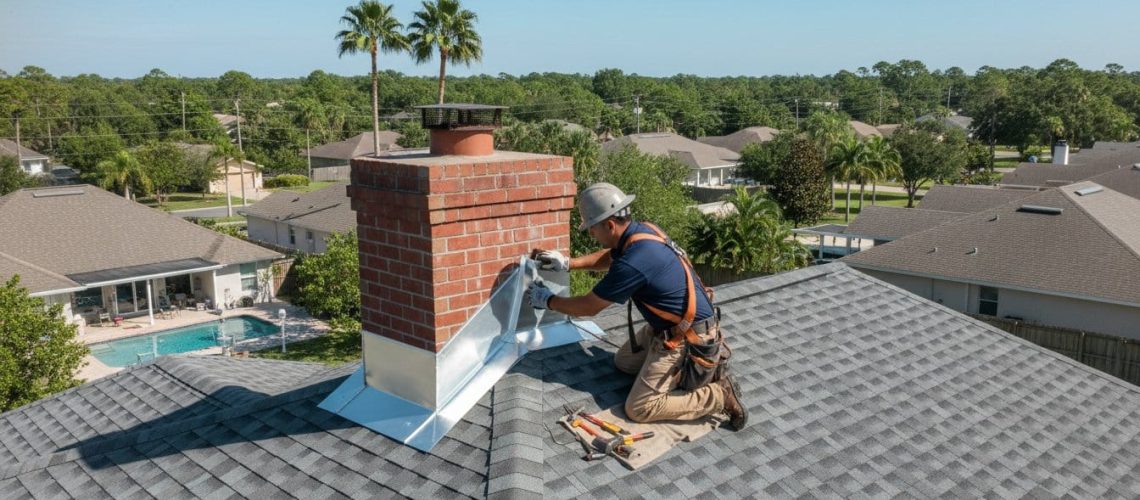
A truly resilient chimney flashing system isn’t a single component; it’s a carefully engineered three-part assembly. To protect your home, we utilize a combination of step flashing, counter-flashing, and apron flashing. Step flashing consists of L-shaped metal pieces woven into the shingle courses, while the apron flashing handles the transition at the base. The most critical element for a permanent seal is the counter-flashing, which must be embedded into the masonry using “reglet” cuts. These are precise grooves cut directly into the brick or mortar joints where the metal is tucked and sealed. Professional contractors follow Brick Industry Association flashing standards to ensure these components work in harmony to shed water away from the structure.
If you see thick layers of black roofing cement smeared around your chimney, be cautious. This material is a temporary band-aid that eventually cracks under the Florida sun. It cannot substitute for the mechanical protection of properly installed metal. A professional chimney flashing repair Tampa homeowners can trust always prioritizes structural metal over topical sealants. If your current flashing relies on “mastic” or cement to stay dry, it’s likely time for a more permanent solution. You can request a professional inspection to see if your system meets these durable standards.
Choosing the Right Metal for Coastal Florida
Material choice is your first line of defense against our salty, humid air. Aluminum is the most common choice for Tampa residential roofs because it’s cost-effective and naturally rust-resistant. For historic homes in neighborhoods like Hyde Park or South Tampa, copper remains the premium, lifetime choice. It develops a beautiful patina and offers unmatched durability. We generally advise against galvanized steel in our region. The salt air in Hillsborough County causes galvanized metal to corrode prematurely, leading to rust holes that compromise your roof’s integrity within just a few years.
Step Flashing vs. Continuous Flashing
The method of installation is just as important as the material. Step flashing is mandatory for shingle roofs because it allows each individual piece of metal to overlap with a specific course of GAF Timberline HDZ shingles. This creates a redundant water shed that moves moisture down the roof deck. Some installers try to save time using “L-flashing” or long, continuous metal strips. These strips are dangerous on sloped roofs because they don’t account for the natural layers of the shingles. Water can easily get trapped behind a continuous strip, leading to the exact type of hidden rot we aim to prevent. Ensuring each “step” is correctly placed is a hallmark of a high-quality chimney flashing repair Tampa residents deserve.
Identifying Chimney Leaks vs. Shingle Damage: A Diagnostic Guide
Identifying the exact source of a leak requires a methodical approach because water rarely travels in a straight line. You might notice rusted metal edges or lifting sections of the apron flashing during a quick visual check from the ground. If the sealant is missing or cracked, water enters during every heavy afternoon thunderstorm. These are the primary external indicators that you need a professional chimney flashing repair Tampa homeowners can trust to stop moisture in its tracks. A small gap in the metal is often enough to allow gallons of water into your structure over a single rainy season.
Look inside your home for the first warning signs. Water stains on the ceiling specifically around the fireplace header often point to flashing failure rather than a standard roof leak. If you can safely access your attic, check the rafters surrounding the chimney base. Damp wood or dark, soft spots on the roof decking are clear signs of moisture intrusion. If you find rotted sheathing, the leak has likely been active for months. Catching these clues early prevents the hidden mold growth that many families rightfully worry about.
We often use a “hose test” to isolate the leak source with precision. This professional method involves running water at low pressure over specific sections of the chimney while an observer monitors the interior or attic space. By starting at the base and moving upward, we can confirm if the water is bypassing the metal or entering through the masonry itself. This step is vital to ensure we don’t just treat the symptoms while leaving the root cause unaddressed.
Is it the Flashing or the Masonry?
It’s important to distinguish if water is soaking through porous bricks or bypassing the metal. Bricks can absorb moisture like a sponge if they aren’t properly sealed. However, the chimney crown, which is the concrete cap at the very top, is also a frequent culprit. If the crown is cracked, water flows down the interior of the masonry and appears near the roofline. Additionally, we check for a chimney “cricket.” This is a small peaked structure behind the chimney designed to divert water. If this diverter is missing or undersized, water pools against the flashing and eventually forces its way inside.
When a Leak Signal Means a Full Roof Inspection
Sometimes a chimney leak is the first symptom of a larger roofing issue. High winds and intense UV exposure affect your entire system simultaneously. If you see heavy granule loss or brittle shingles around the chimney base, your roof is likely signaling wider wear and tear. A localized failure often suggests that the rest of your protection is nearing its limit. For more comprehensive tips on spotting issues across your entire home, see The Ultimate Guide to Roof Repair in Tampa to help you decide if a minor fix or a larger update is necessary.

The Professional Chimney Flashing Repair Process in Hillsborough County
A permanent chimney flashing repair Tampa families rely on involves a methodical five-step process that addresses both the visible metal and the hidden structure beneath. We begin by carefully removing the surrounding shingles and stripping away the old, corroded metal. This exposure is critical because it allows us to perform the second step: a full inspection of the wood decking or “sheathing.” If we find soft spots or rot caused by previous leaks, we replace the structural wood immediately. This ensures the new flashing has a solid, level foundation that won’t shift or sag over time.
The third step focuses on creating a secondary water barrier using high-temp ice and water shield underlayment. We install this membrane so it adheres directly to both the roof deck and the chimney base, providing a backup layer of protection that standard underlayment cannot match. Next, we custom-fabricate new metal step and counter-flashing on-site to ensure a precision fit. This custom metal is tucked into the “reglet” cuts we make in the masonry, creating the mechanical seal described earlier in this guide. Finally, we seal the entire assembly with a high-grade, solar-resistant polyurethane. Unlike cheap caulking, this professional-grade sealant maintains its flexibility despite the intense UV exposure common in Florida. If you suspect your current system is failing, you can schedule a professional assessment to secure your home.
Why DIY Flashing Repairs Usually Fail
Homeowners often attempt to fix leaks themselves using hardware-store silicone or black roofing cement. Unfortunately, silicone doesn’t bond permanently to porous masonry or asphalt shingles, leading to failure within a single season. Another common mistake is trying to tuck new metal under existing shingles without the proper specialized tools, which often causes more shingle damage than it solves. Beyond the technical challenges, the physical danger of working on steep slopes and at chimney heights without professional safety gear is a significant risk that isn’t worth taking for a temporary fix.
What to Expect During Your Rainier Roofing LLC Repair
We treat your property with the same respect we show our own homes. Before work begins, we protect your landscaping and pool deck with heavy-duty tarps to catch any falling debris. Most professional chimney re-flash projects are completed within a single day, minimizing the disruption to your routine. Throughout the Rainier Roofing LLC repair process, we document every stage of the work with high-resolution photos. These records are invaluable for your insurance company or for maintaining a detailed history of your home’s maintenance. This transparency ensures you have peace of mind knowing the work was done correctly from the deck up.
Why Choose a GAF Master Elite Roofer for Your Tampa Chimney Repair
Choosing a contractor for your chimney flashing repair Tampa project is a decision that impacts your home’s security for years. You shouldn’t trust this critical junction to just anyone with a ladder and a bucket of sealant. Rainier Roofing LLC takes pride in our status as a GAF Master Elite roofer, a distinction held by fewer than 2% of roofing contractors nationwide. This certification isn’t just a badge; it’s a verification of our financial stability, commitment to ongoing training, and consistent track record of customer satisfaction. To maintain this elite status, we must prove our reputation through a Google rating of 4.0 or higher and a minimum B rating with the Better Business Bureau, ensuring you are protected by a proven local leader.
We understand the specific environmental stressors that affect neighborhoods from Westchase to Brandon and Odessa. Rainier Roofing LLC treats every chimney as a critical roofing junction rather than just a masonry add-on. This neighborly trust is built on our history of providing long term structural integrity rather than temporary patches. By choosing a local expert who understands the 9th Edition of the Florida Building Code, you ensure that your home remains a safe sanctuary for your family regardless of the weather forecast.
Warranty Protection and Peace of Mind
Hiring a “handyman” for flashing repairs often leads to unintended consequences for your roof’s long term coverage. If an uncertified individual uses non-compatible materials or damages the surrounding area, they can void your manufacturer roof warranty. Rainier Roofing LLC uses GAF certified materials that integrate seamlessly with your existing system, preserving your protection and ensuring every component works as intended. Beyond immediate safety, a professionally documented chimney flashing repair Tampa residents invest in significantly increases your home’s resale value by proving the roof has been maintained to the highest industry standards.
Ready for Hurricane Season?
Properly installed flashing plays a vital role in your home’s wind mitigation profile. During an inspection, secure and code compliant flashing can contribute to the credits needed for significant insurance discounts. In a region where wind driven rain is a constant threat, proactive repairs are a wise investment before the next major storm arrives. We provide fixed fee repairs that offer a clear path forward without the stress of hidden costs or surprise fees. Don’t wait for a tropical system to test your roof’s weakest point. You can schedule your chimney flashing inspection today to ensure your home is fully prepared for whatever the Florida sky brings.
Safeguard Your Home Against Florida’s Toughest Weather
Your chimney’s transition to the roof is its most vulnerable point, but it doesn’t have to be a source of anxiety. By understanding the anatomy of a durable flashing system and recognizing the early signs of failure, you’ve taken the first step toward long-term security. Whether you are dealing with the effects of thermal expansion or preparing for the next hurricane season, a high-quality chimney flashing repair Tampa homeowners trust ensures your attic stays dry and your family stays safe. Professional care transforms a structural weakness into a point of strength.
Rainier Roofing has served as a guardian of local homes for over 15 years. As a GAF Master Elite Certified contractor since 2008, we bring the technical expertise and neighborly trust required to handle complex roofing junctions. Our A+ rating from Hillsborough County homeowners reflects our commitment to moral character and lasting durability. If you suspect a leak or simply want peace of mind before the clouds gather, get a free chimney flashing inspection from Rainier Roofing today. We are here to provide the steady assurance that your home is ready for whatever the Florida sky brings next.
Frequently Asked Questions
How do I know if my chimney flashing is leaking?
You can identify a leak by looking for water stains on the ceiling specifically around the fireplace header or damp rafters in your attic. Visual signs on the exterior include rusted metal, lifting edges, or missing sealant where the chimney meets the roof. If you notice these clues, it is a sign that your home’s primary defense is compromised and needs professional attention.
Can I just use roofing cement to fix a chimney leak?
Roofing cement is a temporary patch that will eventually crack and fail under the intense Florida sun. It doesn’t have the mechanical durability of metal and cannot accommodate the natural expansion and contraction of your home. A professional chimney flashing repair Tampa homeowners can rely on involves replacing the metal components rather than just smearing on a topical sealant.
How much does chimney flashing repair cost in Tampa?
The cost of a repair depends on the size of your chimney, the type of metal selected, and whether the underlying wood decking is rotted. Homeowners should check with a local professional for a detailed estimate that accounts for the specific pitch of the roof and the complexity of the masonry. Investing in a permanent fix now prevents the much higher costs associated with mold remediation and structural rot later.
How long does a professional chimney flashing repair take?
Most professional re-flashing projects are completed within a single day. This timeline includes the careful removal of old shingles, the fabrication of new metal pieces, and the final sealing of the system. If we discover significant damage to the roof sheathing during the inspection, the process might take a few extra hours to ensure the foundation is secure.
Will my homeowners insurance cover chimney flashing repair?
Insurance coverage typically depends on the cause of the leak and the specific language in your policy. If the damage resulted from a sudden event like a hurricane or a fallen tree limb, it is often covered. However, leaks caused by gradual wear, rust, or a lack of maintenance are usually considered the homeowner’s responsibility. It is best to review your policy’s windstorm and water intrusion clauses with your agent.
What is the best metal for chimney flashing in Florida?
Aluminum and copper are the superior choices for our humid, salt-heavy environment. Aluminum is highly rust-resistant and cost-effective for most residential applications. Copper is a premium, lifetime material that is especially well-suited for historic homes in areas like South Tampa. We generally avoid galvanized steel because the salt air in Hillsborough County causes it to corrode and develop pinhole leaks prematurely.
Is a chimney leak a roofing problem or a fireplace problem?
A leak is a roofing problem if the water enters at the junction where the chimney meets the roof deck. If the metal flashing or the surrounding shingles are the source of the intrusion, you need a roofing professional. If water is entering through the interior flue or a cracked concrete crown at the very top of the structure, you should contact a masonry specialist or chimney sweep instead.
Do I need a chimney cricket for my Tampa home?
You need a chimney cricket if your chimney is wider than 30 inches or sits on a steep slope that catches a lot of runoff. A cricket is a small, peaked structure built behind the chimney to divert water toward the gutters. Without this diverter, water pools against the flashing during heavy Tampa rainstorms, which is a leading cause of chimney flashing repair Tampa residents face. Building a cricket is a proactive way to safeguard your roof’s integrity.