
Could a simple patch today save your business from a total system replacement tomorrow, or is your current leak a sign that the clock has finally run out? In Florida’s unforgiving climate, the line between a routine commercial roof repair tampa and a mandatory full-scale overhaul is often thinner than you think. With the 8th Edition of the Florida Building Code currently in effect and stricter fastener standards arriving with the 9th Edition in late 2026, every maintenance decision carries significant financial weight.
We understand that as a Tampa property owner, you’re juggling more than just a dripping ceiling. You’re managing rising insurance premiums and the constant threat of humidity-driven structural rot. It’s stressful to wonder if your contractor truly understands the technical nuances of TPO or Modified Bitumen systems. This guide will show you how to identify early warning signs, navigate the complexities of Florida insurance claims, and implement a maintenance strategy that maximizes your property’s ROI. We’ll explore the requirements for hurricane resilience and provide the documentation you need to protect your assets through 2026 and beyond.
Key Takeaways
- Learn how Tampa’s intense UV exposure and rapid thermal shock compromise roofing membranes; this knowledge helps you spot seam failures before they cause interior damage.
- Identify specific warning signs for TPO and Modified Bitumen systems, such as membrane shrinkage and granule loss, to catch issues while they are still repairable.
- Understand the Florida Building Code’s “25% Rule” to decide if a commercial roof repair tampa is your best financial move or if the law requires a full replacement.
- Discover how professional moisture probes and infrared technology locate hidden leaks within your roof’s core, saving you from unexpected structural rot.
- Implement a proactive maintenance checklist to keep drains clear and extend the lifespan of your current roofing system through the next hurricane season.
The Unique Challenges of Commercial Roof Repair in Tampa’s Climate
Tampa’s geographical position creates a laboratory for roof degradation. The high UV index here does more than just heat your building; it causes a chemical process known as membrane embrittlement. In systems like TPO and EPDM, prolonged exposure to intense radiation strips the material of its flexibility. Over time, the once-pliable surface becomes brittle and prone to micro-cracking. This is a primary driver for commercial roof repair tampa services, as these tiny fissures eventually allow water to bypass the primary barrier and reach the building’s interior.
The most violent stressor for a local roof is a phenomenon known as “Thermal Shock.” Imagine a typical July afternoon where your roof surface reaches 150 degrees or more. Suddenly, a heavy thunderstorm drops the temperature by 40 degrees in a matter of minutes. This rapid cooling causes the materials to contract at a speed the fasteners and adhesives often cannot match. This mechanical stress repeatedly tugs at the seams, eventually leading to separation and failure. This is why a roof that was watertight in June can suddenly develop massive leaks by August.
Humidity remains a constant adversary for local property owners. Because many local businesses utilize flat roof construction, ponding water is a recurring issue. When water sits for more than 48 hours, it creates a breeding ground for algae and micro-biological growth that can eat through older asphalt-based materials. Additionally, for properties near Old Tampa Bay or in coastal areas like Odessa, the salt-laden air accelerates the oxidation of metal components. Even high-quality Standing Seam Metal Roofing requires specialized coatings to resist the corrosive effects of the coastal environment.
Thermal Expansion and Contraction in Florida
Large-scale commercial structures in areas like Brandon and Lutz experience significant movement every day. A 50,000-square-foot warehouse can expand and contract by several inches as temperatures swing between the midday sun and the evening cool. This constant shifting makes seam failure the number one repair request we handle. We often recommend high-reflectivity “cool roof” coatings to mitigate this stress. These coatings reflect a higher percentage of solar energy, keeping the roof surface closer to the ambient air temperature and reducing the physical strain on the structure.
The Threat of Tropical Storms and Hurricane-Force Winds
Storm season brings the risk of wind-uplift, which occurs when high-velocity air creates a pressure differential that pulls the roofing material away from the deck. Under Florida’s ASCE 7-22 standards, wind-uplift is defined as the upward force caused by wind pressure acting on a roof system. We frequently see this damage around the perimeters and corners of buildings where wind speeds are highest. Even if the roof stays attached, flying debris from summer squalls often causes small punctures. These “silent” leaks may not show up immediately, but they slowly saturate the insulation, leading to structural rot that requires expensive remediation if not caught early.
Identifying Common Commercial Roof Failures by Material Type
Every roofing material responds differently to the relentless stress of the Gulf Coast environment. Identifying these material-specific signs early is the first step toward a successful commercial roof repair tampa project. If you catch a seam failure or a small puncture now, you protect the structural integrity of your building and avoid the high costs of emergency remediation later. Our role as guardians of your property starts with helping you understand what to look for during your monthly walk-throughs.
TPO (Thermoplastic Polyolefin) is a common choice for local warehouses, but it’s not invincible. You should check for membrane shrinkage, which often manifests as pulled seams or “tenting” at the roof’s edge. Because the material is thin, puncture damage from dropped tools or wind-blown debris is a frequent culprit for slow leaks. When deciding between TPO vs. Modified Bitumen for a Tampa Flat Roof, it’s vital to consider how each handles our high UV index over a ten-year span.
Modified Bitumen systems show their age through “alligatoring,” a pattern of cracks that looks like reptilian skin. This happens when the asphalt oils dry out under the sun. You might also notice significant granule loss in your gutters or edge de-lamination where the layers begin to peel apart. For metal roofing, we often spot fastener back-outs caused by the thermal expansion mentioned earlier. Oxidation and flashing failures around HVAC curbs are also common. Built-Up Roofing (BUR) typically fails through blisters, which are pockets of air or moisture trapped between layers, or gravel displacement that leaves the underlying felt exposed to the sun.
Single-Ply Membrane Vulnerabilities (TPO/PVC)
Chemical degradation is a hidden threat to single-ply membranes. If your business has a commercial kitchen or heavy machinery, grease and chemical exhaust can soften TPO and PVC, leading to premature failure. We follow the technical guidelines set by the National Roofing Contractors Association (NRCA) which emphasize probe-testing seams. A professional technician uses a specialized tool to physically “hook” the seam; if the tool sinks in, the weld has failed. If you suspect your seams are weakening, you should schedule a professional assessment before the next storm hits.
Modified Bitumen and Multi-Ply Systems
Asphalt-based systems require a different approach than single-ply membranes. You can’t just slap a TPO patch on a Modified Bitumen roof; the materials aren’t compatible and the patch will fail. Florida’s humidity creates a high risk of “trapped moisture” between plies. If this moisture heats up during a 90-degree afternoon, it turns to steam and expands, creating large bubbles that can eventually burst. If your roof coating feels brittle or shows widespread cracking, it’s a clear sign the system has reached the end of its functional life and needs professional attention to stay watertight.
Repair vs. Replacement: Making the Strategic Call for Your Tampa Property
Deciding whether to patch a leak or invest in a new system is one of the most significant financial choices a property manager faces. It isn’t just about the immediate cost of a commercial roof repair tampa; it’s about the long-term viability of your business asset. We approach this choice as your consultant, looking at the data to determine if a repair provides a genuine extension of life or merely delays the inevitable. Our goal is to ensure your roof can survive the next hurricane season without compromising your interior operations.
We evaluate several factors before making a recommendation. The age of the roof, the remaining warranty life, and the frequency of recent leaks all play a role. If your system is nearing the end of its projected lifespan, the amortized cost of a new installation might actually be lower than the mounting price of constant patches. We help you find that break-even point where a new system becomes the more profitable path for your property’s ROI.
The Florida Building Code and the 25% Threshold
Under Florida’s latest building codes, specifically the 8th Edition of the FBC, the 25% Rule is a critical legal threshold you cannot ignore. If more than 25% of a roofing system or section is repaired or replaced within a 12-month period, the law may require the entire system to be brought up to current code. This regulation prevents piecemeal repairs that bypass modern safety standards. Rainier Roofing LLC works closely with Hillsborough County building officials to provide clear documentation of damage, ensuring your project remains compliant. Strategic partial replacements can sometimes reset the 25% clock for a specific roof section, provided the work is permitted and documented correctly.
Infrared Moisture Detection: Seeing Beneath the Surface
We don’t guess about the health of your roof; we use technology to see through the membrane. Infrared thermography allows us to identify hot spots where moisture is trapped within the insulation. This non-destructive testing saves you money by targeting only the truly wet areas for removal rather than stripping the entire deck. There is a massive difference between a simple surface leak and structural deck saturation. If the core is dry, a repair is often the smartest move. However, if the insulation is saturated, a patch is just a temporary fix on a failing foundation. For a deeper look at these technical distinctions, see our Complete Guide to Commercial Roofing in Tampa.

The Rainier Roofing LLC Professional Repair Process
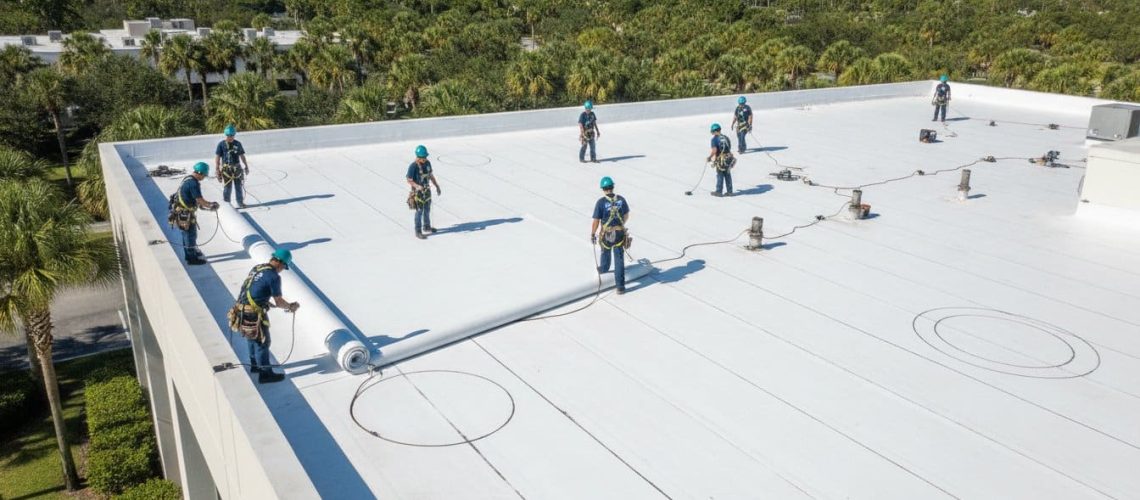
A successful commercial roof repair tampa requires more than a bucket of sealant and a ladder. It demands a methodical, engineering-based approach that respects the technical requirements of your specific roofing system. As guardians of your business property, we follow a steady, five-step restoration process designed to stop active damage and prevent future failures. We don’t believe in quick fixes that only last until the next thunderstorm; we believe in repairs that stand the test of time.
Our process begins with a Rapid Response Inspection. We identify the primary entry point of the water and document any secondary damage to the underlying deck or insulation, building on the infrared data discussed earlier. If the weather is still threatening, we move immediately to Emergency Mitigation. This includes emergency roof tarping or temporary seals to prevent further interior loss while we finalize the permanent repair plan. From there, we focus on Material Matching and Execution. We ensure every repair membrane is chemically compatible with your existing system and apply it using professional heat-welding or high-performance adhesives. Finally, we conduct a Quality Assurance check, including a water test and comprehensive photo documentation for your insurance or tax records.
Chemical Compatibility in Membrane Repairs
One of the most common mistakes in the industry is using the wrong repair compounds. You can’t use asphalt-based mastic or roofing cement on a TPO roof. The chemicals in the asphalt will actually degrade the thermoplastic membrane, leading to a much larger hole than you started with. We take the time to clean weathered membranes thoroughly, removing years of Tampa humidity and grime to ensure a proper molecular bond. Because Rainier Roofing LLC is GAF Master Elite certified, we source GAF-certified materials that match the original manufacturer’s specifications for consistent performance.
Safety and Business Continuity During Repairs
We understand that your business doesn’t stop just because your roof has a problem. Our Quiet Crew protocols are designed to minimize noise and disruption for your tenants or customers. We maintain strict OSHA compliance and perimeter safety to protect your employees and the public throughout the project. Whether your facility is in Brandon, Wesley Chapel, or Bradenton, we arrive ready to work efficiently without compromising the safety of your site. If you’re currently dealing with a leak that’s disrupting your operations, you can request a professional repair assessment today to secure your building’s future.
Securing Your Investment with Preventative Maintenance
The most effective way to manage your roofing budget is to prevent the need for an emergency commercial roof repair tampa in the first place. We view ourselves as guardians of your business, and our preventative maintenance programs are the foundation of that protection. A “Fixed-Fee” maintenance plan acts as a hedge against inflation and unexpected repair costs. By identifying small issues like a loose flashing or a clogged scupper during a scheduled visit, we stop the cycle of reactive repairs that can disrupt your daily operations.
Our “Clean and Clear” checklist is specifically designed for the heavy rainfall patterns seen in Hillsborough and Pasco counties. We ensure that drains, scuppers, and gutters are free of debris to prevent ponding water, which we previously noted can lead to membrane failure. As we prepare for the 2026 hurricane season, these inspections become even more critical. We provide pre-storm assessments to ensure your roof meets current wind-resistance standards and offer post-storm priority service to our maintenance partners in Brandon, Lutz, and Odessa. This proactive stance ensures your facility is ready for whatever the Gulf Coast weather brings.
The ROI of Preventative Maintenance
Investing in a maintenance plan delivers a clear financial return. Industry data suggests that properly maintained commercial roofs can last up to 50% longer than those that are neglected. This extension of your roof’s service life allows you to defer the high cost of a total replacement for years. Additionally, a documented maintenance history is an invaluable asset when you need to file an insurance claim or provide records for a property tax audit. For more information on protecting your local property, read The Ultimate Guide to Roof Repair in Tampa, FL.
Why a GAF Master Elite Roofer Matters for Commercial Work
Choosing the right partner for your maintenance is as important as the plan itself. Only 2% of roofing contractors nationwide achieve the GAF Master Elite certification. This status isn’t just a badge; it’s a testament to our ongoing commitment to technical excellence and professional accountability. To maintain this standing, we undergo rigorous training and must meet strict insurance and licensing requirements that protect you as a property owner. This certification also gives us the unique ability to offer superior warranty extensions that aren’t available through standard contractors. You can learn more about this distinction in our guide on GAF Master Elite Roofer Tampa: Why the Top 2% Matters. We take pride in our local roots and our history of providing reliable, professional service to the Tampa Bay business community.
Finalizing Your Commercial Roofing Strategy for 2026
Protecting your property from the Gulf Coast’s volatile weather requires a shift from reactive patching to a long-term engineering strategy. Throughout this guide, we’ve explored how technical precision, from infrared moisture detection to chemical compatibility, determines the success of a commercial roof repair tampa. By prioritizing early detection and adhering to the 25% rule, you avoid legal complications and extend the functional life of your investment. It’s about more than just staying dry; it’s about maintaining a secure environment for your employees and customers through every storm season.
As a GAF Master Elite Certified contractor with over 15 years of local experience and an A+ rating for professional excellence, we take our role as your property’s guardian seriously. We understand the specific stressors unique to Hillsborough and Pasco counties. Schedule Your Free Commercial Roof Inspection with Rainier Roofing LLC to ensure your building remains a resilient asset. We’re here to provide the steady, professional support your business needs to stay protected for years to come.
Frequently Asked Questions
How much does commercial roof repair cost in Tampa?
The total cost for a commercial roof repair tampa depends on the material type, the extent of the damage, and the height of the building. While we don’t provide flat estimates without an inspection, you should account for local permit requirements. For example, the City of Tampa currently charges a flat fee of $181.43 for a reroofing permit, which doesn’t include mandatory state surcharges. We provide a detailed breakdown after our initial inspection so you can manage your budget without surprises.
Can you repair a TPO roof that is already 15 years old?
You can often repair a 15-year-old TPO roof if the membrane hasn’t reached a state of total embrittlement. We use specialized tools to test the flexibility of the material and ensure it can still accept a new heat-welded patch. If the high UV index in Florida has caused the TPO to become too brittle to bond, we’ll discuss more sustainable options to protect your building. Our goal is to ensure any repair we perform provides a reliable, watertight seal.
How long does a typical commercial roof repair take?
Most standard commercial repairs are completed within one to three business days. If you’re dealing with an active leak, we prioritize emergency roof tarping to stop interior damage immediately. More complex projects involving structural deck repair or large-scale membrane replacement may take longer. We provide a clear timeline before work begins so you can coordinate with your staff and tenants effectively.
Will my business have to close during the roofing repair process?
Your business can typically remain fully operational throughout the entire repair process. We utilize “Quiet Crew” protocols to minimize noise and ensure your daily workflow isn’t disrupted. Our teams establish strict perimeter safety zones and OSHA-compliant staging areas to protect your employees and customers while we work. We focus on efficiency so we can get off your roof as quickly as possible without compromising quality.
Does commercial roof repair come with a warranty?
Professional repairs typically include a workmanship warranty that covers the specific area we serviced. Because we’re GAF Master Elite contractors, we can sometimes offer enhanced manufacturer-backed coverage on larger repair projects or partial replacements. This certification is only held by the top 2% of roofers, providing you with an extra layer of security. We provide all warranty documentation in writing once the final quality assurance check is complete.
What happens if my commercial roof leaks after hours in Tampa?
You should contact a professional immediately to arrange for emergency mitigation services. We provide emergency roof tarping to prevent water from damaging your inventory, electronics, or structural flooring during a midnight storm. Securing the building quickly is the best way to keep your insurance claim manageable and prevent the growth of mold. Once the weather clears, we’ll return to perform a comprehensive thermal inspection and permanent repair.
Is it better to repair or coat a flat roof in Florida?
The choice between a repair and a coating depends entirely on the condition of your roof’s core. If our infrared moisture detection shows that your insulation is dry, a high-reflectivity coating can be a great way to extend the system’s life and reduce cooling costs. However, if the insulation is already saturated, applying a coating will simply trap the moisture and lead to rot. We always test the underlying layers before recommending a coating over a traditional repair.
Does insurance cover commercial roof repairs after a storm?
Insurance often covers repairs caused by “sudden and accidental” events like hurricane-force winds or hail impact. In Florida’s hurricane-impacted counties, roughly 55% to 70% of roof replacements are paid for by insurance carriers. We help you navigate this process by providing the clear photo documentation and technical reports your adjuster needs to process the claim. Having a professional record of your damage is the most effective way to ensure you receive the coverage you’re entitled to.