
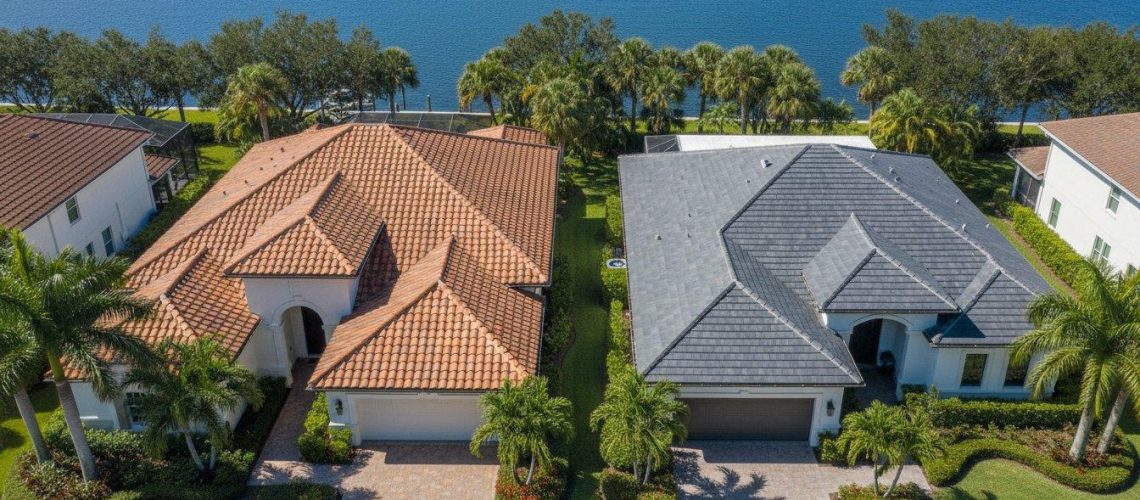

Could your choice between two similar looking tiles be the difference between a minor repair and a total structural failure during the next major hurricane? Since 1987, our family-owned team has seen how the Florida sun and salt air test every square inch of a home’s exterior. You likely already know that concrete and clay tile roofing is the gold standard for Tampa’s Mediterranean architecture, yet the 15% average rise in regional home insurance premiums over the last year makes this decision more than just a cosmetic choice. It’s about protecting your family and your investment for the next half-century.
You want a roof that stands firm against 130 mph winds while keeping your attic cool during a July heatwave. We understand that the price gap between these materials can be confusing, but making the right selection now prevents the stress of a premature replacement later. This guide explains the Rainier Difference by comparing durability, weight, and thermal resistance for 2026. You’ll learn exactly how to choose a solution that offers maximum protection and a 50 year lifespan. We’ll break down the maintenance requirements and aesthetic benefits so you can move forward with confidence and peace of mind.
Key Takeaways
- Understand why tile systems are the architectural standard for heat resistance and thermal protection in Tampa Bay communities like Odessa and Brandon.
- Learn how to choose between concrete and clay tile roofing by comparing material durability, weight, and long-term labor costs for 2026.
- Determine if your home can safely support a tile system by exploring the critical differences between standard and lightweight structural options.
- Discover why the underlayment is your “real” roof and how Florida’s high-wind installation standards provide maximum storm protection for your family.
- See how the “Rainier Difference” utilizes over 35 years of local expertise to verify your home’s structural integrity and ensure a worry-free installation.
Understanding Concrete and Clay Tile Roofing for the Tampa Climate
Selecting a roof in the Tampa Bay area requires a long-term perspective on both weather protection and energy efficiency. Concrete and clay tile roofing represents the gold standard for homeowners who prioritize structural integrity and performance. These systems are heavy, durable, and possess high thermal mass, making them an ideal shield against the 90-degree temperatures we face for much of the year. While the history of roof tiles dates back thousands of years, modern manufacturing has turned these materials into high-tech solutions for the Florida environment.
At Rainier Roofing, we’ve served this community since 1987. We view a tile roof as a legacy investment rather than a temporary fix. While standard asphalt shingles often require replacement after 15 to 20 years due to UV degradation and humidity, a professional tile installation can last between 50 and 100 years. This incredible lifespan is why tile remains the architectural requirement in premier communities like Odessa and Brandon. We don’t just see ourselves as contractors; we act as guardians of your family home, ensuring your investment stands firm against the elements for decades.
The Science of Thermal Mass and Energy Savings
Tiles are unique because they don’t just sit on your house; they actively manage heat. The dense material absorbs solar energy during the day and releases it slowly at night, which prevents your attic from becoming an oven. Our team utilizes a vented installation technique that creates a natural air gap between the tiles and the roof deck. This air barrier acts as a second layer of insulation, significantly reducing the workload on your HVAC system.
Thermal mass acts as a thermal battery that absorbs daytime heat and prevents it from spiking your air conditioning costs during the hottest hours of the day.
Aesthetics: From Mediterranean to Modern
Concrete vs. Clay Tiles: A Detailed Comparison for 2026
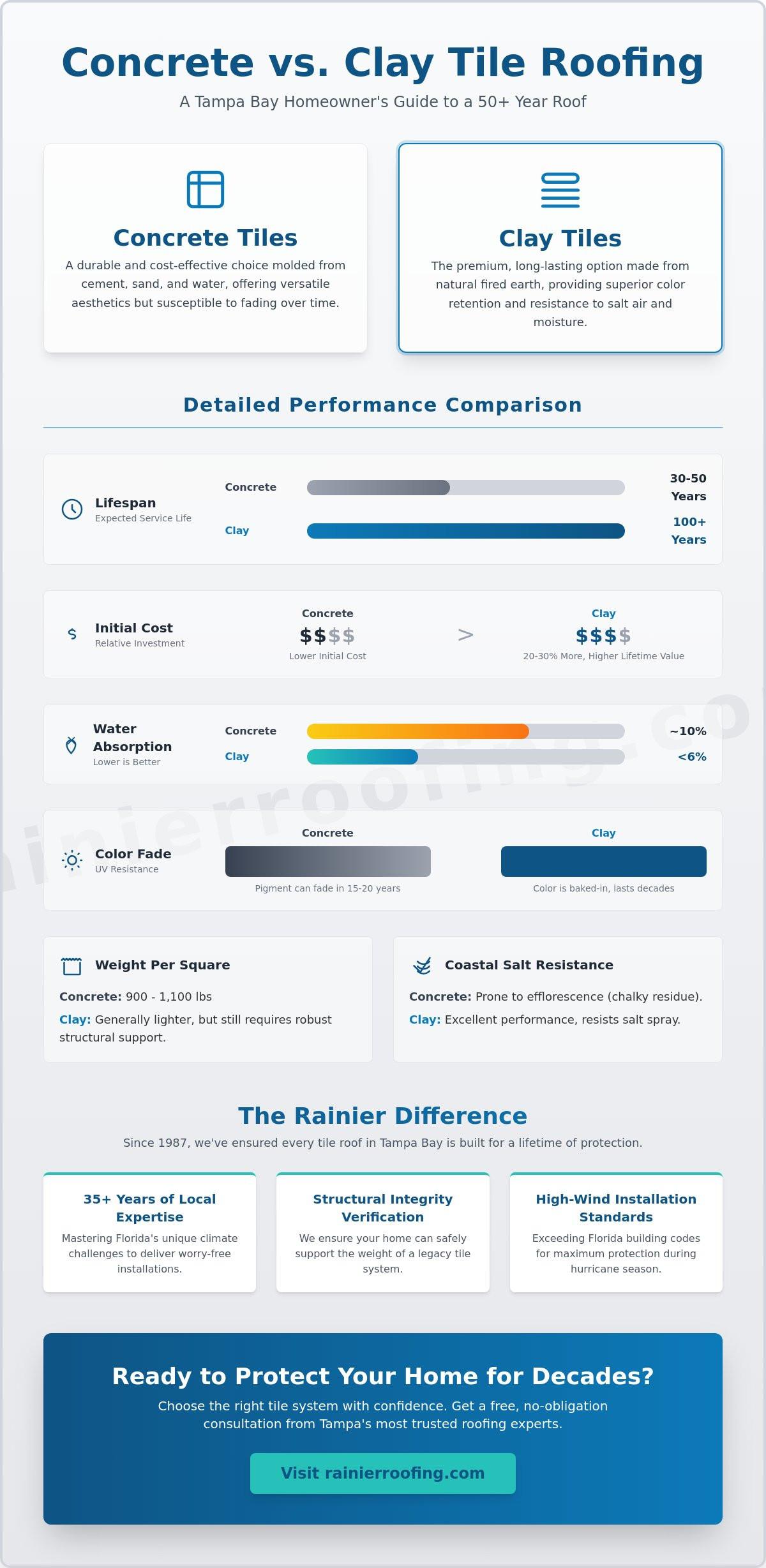
Choosing between concrete and clay tile roofing involves understanding how these materials react to the intense Florida sun and daily humidity. Clay tiles consist of natural earth minerals fired in high-temperature kilns, creating a ceramic-like finish that resists the elements. Concrete tiles are molded from a mixture of Portland cement, sand, and water. While both options provide a significant upgrade over asphalt shingles, their performance profiles differ for homeowners in the Tampa Bay area. Our team at Rainier Roofing has installed these systems since 1987, and we’ve seen how each material handles our unique tropical environment.
Concrete tiles are generally heavier than clay, often weighing between 900 and 1,100 pounds per square. This weight increases shipping expenses and requires a roof deck that meets the Florida Building Code for tile roofs. Clay tiles are usually lighter, though they still require a robust structural support system. Color longevity also varies. Clay maintains its vibrant hue for decades because the color is baked into the material. Concrete tiles rely on pigments or slurry coats that can fade over 15 to 20 years of UV exposure.
In humid suburbs like Lutz and Brandon, water absorption is a critical concern. Concrete tiles have a higher absorption rate, roughly 10 percent, which can encourage mold and mildew growth on the surface. Clay tiles absorb less than 6 percent of their weight in moisture. This lower rate makes clay more resistant to the organic growth that often plagues Florida rooftops. The Rainier Difference means we evaluate these factors based on your specific neighborhood and tree coverage.
Durability and Lifespan Expectations
A well-maintained clay roof can easily exceed 100 years of service. Concrete concrete and clay tile roofing typically ranges from 30 to 50 years. While freeze-thaw cycles aren’t a concern in Tampa, salt-spray resistance is vital for homes near the coast. Clay excels in salty air and is less prone to efflorescence, the white chalky residue that often appears on concrete surfaces when soluble salts migrate to the exterior. This residue doesn’t hurt the tile’s integrity, but it can dull your home’s appearance.
Cost Analysis: Initial Investment vs. Lifetime Value
Clay tiles carry a price premium, often costing 20 to 30 percent more than concrete alternatives. This higher initial investment is balanced by the extended lifespan and lower maintenance needs over time. Installing tile can also lead to lower insurance premiums in Hillsborough County because carriers value the superior fire and wind resistance. For homeowners managing older systems, our Ultimate Guide to Roof Repair in Tampa, FL provides essential strategies for maintaining these assets. If you’re ready to secure your home’s future, Rainier Roofing can provide a professional structural assessment to determine the best fit for your property.
Structural Requirements: Can Your Tampa Home Support a Tile Roof?
You’re likely asking the most common question we hear at Rainier Roofing: Is my house strong enough? Most Tampa homes built specifically for asphalt shingles aren’t immediately ready for the substantial weight of concrete and clay tile roofing. A standard shingle roof weighs roughly 2.5 pounds per square foot, while a traditional tile roof can exceed 10 pounds per square foot. This 400% increase in dead load requires more than just a simple installation; it requires a professional verification of your home’s skeletal integrity. Homeowners who find that their structure cannot support tile weight may also want to explore the cost of metal roof Florida installations as a lightweight, high-wind-resistant alternative that still delivers exceptional long-term ROI.
Hillsborough and Pasco County building codes are strict for a reason. Before we pull a permit for a shingle-to-tile conversion, you must obtain a structural engineer’s report. This Florida-licensed professional calculates if your existing trusses can handle the added stress. Since 1987, we’ve guided homeowners through this process to ensure every project meets the 2023 Florida Building Code standards. We don’t guess when it involves the safety of your family and the longevity of your investment.
The Role of Structural Reinforcement
If the engineer’s report shows your home needs a boost, we implement specific reinforcement methods to prepare the structure. This often includes sistering rafters, where we bolt new lumber to existing trusses to increase load-bearing capacity. We also install additional collar ties or web bracing to stabilize the system. Skipping these reinforcements causes the roofline to dip or sag over time. This isn’t just an eyesore; it compromises the water-shedding ability of the tiles and can lead to structural failure during a tropical storm. Our team acts as your protective professional, ensuring your home remains a fortress against the elements.
Lightweight Tile Alternatives
If your home’s structure cannot support traditional weight, you don’t have to give up on the tile aesthetic. Modern manufacturers produce lightweight concrete tiles that are 20% to 30% lighter than standard versions. These tiles typically weigh under 600 pounds per square (100 square feet). They are an excellent choice for Tampa homes built in the 1990s that were never designed for heavy clay. These lightweight options still provide the high-wind resistance required in Florida. They offer a balance of beauty and safety without the need for invasive structural changes to your attic. Choosing the right concrete and clay tile roofing material depends entirely on your home’s existing bones, and we’re here to provide an honest assessment.
The Florida High Wind Installation Process
In the Tampa Bay area, a roof is only as reliable as its installation method. We follow the 7th Edition Florida High Wind Concrete & Clay Tile Installation Manual strictly to ensure every home meets the rigorous 2024 Florida Building Code requirements. Our team understands that concrete and clay tile roofing provides a heavy shield, but the specialized mechanics underneath keep that shield from moving during a hurricane. Since 1987, we’ve seen how precision in the small details prevents major failures during storm season.
Underlayment: The First Line of Defense
While the tiles catch the eye, the underlayment provides the actual waterproof barrier for your home. We recommend self-adhering (peel-and-stick) membranes rather than traditional felt. These modern membranes bond directly to the roof deck, which creates a secondary water barrier that seals around every nail penetration. Even if a tile breaks during a storm, the underlayment keeps your family dry. Most tile underlayment systems require replacement every 20 to 25 years. This cycle is shorter than the lifespan of the tiles themselves, which often last 50 years or more. Understanding the full scope of tile roof repair in Hillsborough County — including underlayment replacement — is essential for protecting your long-term investment. If you prefer a system with a different maintenance profile, you might compare these options to Standing Seam Metal Roofing for your property.
Fastening for Hurricane Resistance
Wind uplift is the specific upward force created by high-velocity air as it moves over your roof’s surface. In high-wind zones like Wesley Chapel, where gusts can exceed 140 mph, managing this force is vital for home safety. We utilize three primary methods to secure your roof against these pressures:
- Stainless Steel Screws: These provide a mechanical bond that resists rust in our humid, salty air.
- Two-Component Adhesive Foam: This creates a superior bond that cushions tiles and reduces “chatter” or vibration during intense storms.
- Hurricane Clips: We install these for additional security on perimeter tiles where wind pressure is historically highest.
The “Rainier Difference” means we don’t cut corners on these invisible components. Our technicians are experts in local wind zones, ensuring your installation exceeds minimum safety standards. We treat every project with the same care we’d use for our own families, providing you with long-term security and peace of mind.
The Rainier Difference: Expert Tile Roofing Since 1987
Rainier Roofing has stood the test of time in the Tampa Bay area since 1987. We’ve spent over 15 years refining our residential expertise, building a legacy on the foundation of neighborly trust and technical excellence. When you choose concrete and clay tile roofing, you’re making a multi-decade investment in your home’s security. We take that responsibility seriously. Our family-owned team doesn’t view your roof as just another project; we see ourselves as the guardians of your family home, providing the peace of mind you deserve.
Our consultative approach sets us apart from standard contractors. We don’t just provide a quote and move on. We conduct a rigorous structural verification for every property. Because tile systems can weigh up to 1,200 pounds per square, it’s vital to ensure your home’s framing and trusses can handle the load. This careful planning eliminates the stress of home maintenance and protects your investment from the ground up. We use our deep knowledge of Florida’s climate to help you select materials that offer maximum protection against heat, humidity, and high winds. For budget-conscious homeowners who want to compare all available options, our detailed breakdown of the cost of metal roof Florida pricing and ROI for 2026 offers a useful side-by-side perspective on long-term value.
Why a GAF Master Elite Roofer Excels at Tile
Our status as a GAF Master Elite contractor places us in the top 2% of roofing professionals in North America. While this certification is a mark of excellence in asphalt systems, the meticulous standards it requires translate directly to our tile craftsmanship. The same precision needed to maintain this elite status ensures that your concrete and clay tile roofing is installed with zero room for error. You can learn more about why a GAF Master Elite Roofer Tampa is the right choice for your high-end installation. We also prioritize job site cleanliness and safety, ensuring your residential neighborhood remains tidy and secure throughout the construction process.
Schedule Your Professional Tile Consultation
The “Rainier Difference” is rooted in our local expertise and commitment to craftsmanship. We understand the unique environmental challenges facing homes in Bradenton, Odessa, and Brandon. Our team is ready to provide a structural-first assessment to help you choose the right tile for your specific architecture. Don’t leave your home’s longevity to chance. Contact us today to speak with a seasoned expert and receive a free roofing estimate in Tampa. We are ready to help you secure a roof that will protect your family for the next 50 years.
Secure Your Tampa Home for the Decades Ahead
Choosing between concrete and clay tile roofing requires a balance of aesthetic preference and structural reality. While clay offers color permanence that lasts for 50 years or more, concrete provides a rugged alternative that meets the rigorous 2023 Florida Building Code requirements. Your roof is your home’s primary defense against the 150 mph wind gusts that define our local storm seasons. Ensuring your Hillsborough County home can support the 900 to 1,200 pounds per square typical of these systems is the first step toward long-term security.
Since 1987, Rainier Roofing has served as a trusted guardian for Tampa families. We’re Hillsborough County structural load specialists who understand the complexities of Florida High Wind installation standards. As a family-owned and operated team, we don’t just install roofs; we provide a professional shield for your most valuable asset. If you’re ready to upgrade your home’s resilience, our experts are here to guide you through every technical detail with the Rainier Difference of neighborly care.
Request Your Free Tile Roof Inspection and Estimate Today
We look forward to helping you make the best investment for your home’s future and your family’s safety.
Frequently Asked Questions
How much does a concrete or clay tile roof cost in Tampa?
Concrete and clay tile roofing costs in Tampa typically range from $8 to $25 per square foot according to 2024 industry data from HomeAdvisor. While the initial investment is higher than asphalt shingles, the long-term value remains unmatched for local homeowners. Factors like your roof’s pitch and the specific material grade influence your final quote. We provide clear, detailed estimates so you understand exactly how your investment secures your home’s future.
How long does a tile roof actually last in Florida?
You can expect a high-quality tile roof to last between 50 and 100 years in the Florida climate. While the tiles themselves endure for many decades, the waterproof underlayment usually needs professional replacement every 20 to 25 years. This impressive longevity is why we’ve trusted these materials since 1987 to protect Tampa families from intense sun and tropical storms. It’s a permanent solution for a lifetime of security.
Do tile roofs require more maintenance than shingles?
Tile roofs require less frequent replacement than shingles but need specific, routine care to maintain their integrity. You should schedule a professional inspection once every 12 months to check for debris buildup or minor tile shifts. Because tiles don’t rot or burn, they offer a worry-free solution for homeowners who prioritize structural safety. We focus on these small details to ensure your home stays protected through every season.
Can I walk on my tile roof to clean the gutters?
You shouldn’t walk on your tile roof because individual pieces can crack under concentrated weight. If you need to clean your gutters, use a ladder secured against the fascia or call a professional with specialized equipment. Walking incorrectly on the surface often voids manufacturer warranties and creates hidden leaks. Our team uses specific weight-distribution techniques to ensure we never damage your home during a maintenance visit.
Is clay tile more hurricane-resistant than concrete tile?
Both materials offer exceptional protection, as concrete and clay tile roofing systems are tested to withstand wind speeds exceeding 150 mph. Clay tiles are often more color-fast over 50 years, while concrete tiles provide immense impact resistance against flying debris. We ensure every installation meets the 2023 Florida Building Code requirements. This commitment provides your family with maximum protection during the peak of hurricane season.
Will a tile roof make my house cooler?
A tile roof can reduce your cooling costs by up to 20 percent according to data from the U.S. Department of Energy. The natural air gap created under the tiles acts as an extra layer of insulation, preventing heat from transferring into your attic space. This thermal barrier is a key part of the Rainier Difference. It helps Tampa homeowners manage 90-degree summer days more efficiently while keeping indoor spaces comfortable.
What happens if a single tile cracks?
If a single tile cracks, you should replace it immediately to prevent water from reaching the sensitive underlayment. A single broken piece doesn’t mean you need a full replacement, but it does expose the layers beneath to UV rays and rain. For a complete overview of what to expect when addressing these issues, our tile roof repair Hillsborough County guide walks you through every step of the process. We’ve been performing these precise repairs since 1987. Our goal is to ensure a small issue doesn’t turn into a costly structural problem for your household.
Does my home insurance cover tile roof replacement?
Your insurance policy typically covers tile roof replacement if the damage results from a sudden event like a 2024 storm or a fallen tree. Most Florida policies won’t pay for a new roof if the materials simply reach the end of their 50-year lifespan. We recommend reviewing your specific policy’s windstorm deductible with your agent. Our team provides the documentation you need to make the claims process straightforward and stress-free.