
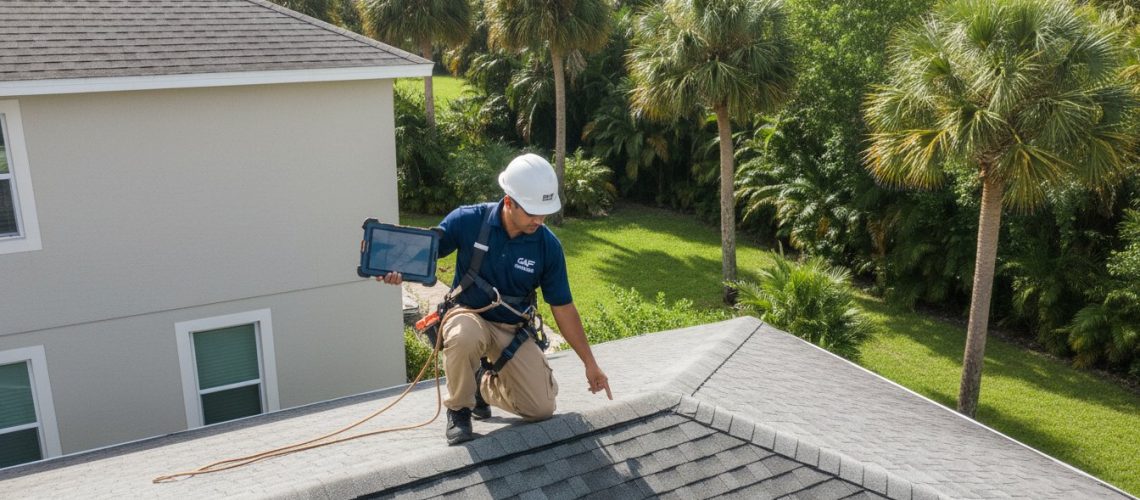

What if the age of your roof wasn’t the deal-breaker you’ve been led to believe? Under Florida’s 2026 insurance reforms, specifically House Bill 815, insurers can’t deny you coverage based on age alone if the structure is still sound. However, the clock is ticking faster than it used to; you now have only one year from the date of loss to start the process. Understanding how to file a roof damage insurance claim in Florida requires more than just filling out forms. It demands a technical strategy to ensure your home remains the safe haven your family deserves.
We know the stress that comes with hurricane season and the confusion caused by shifting legislation. It’s frustrating to feel like the rules change every time you look at your policy. Our goal is to replace that anxiety with a clear roadmap for success. You’ll learn how to navigate the complex Florida insurance landscape with confidence using our step-by-step guide to securing a full roof replacement payout. We’ll walk through everything from the new 60-day payment deadline to the Florida Matching Rule, and explain why a technically superior initial inspection is your best defense against a claim denial.
Key Takeaways
- Prioritize safety by avoiding damaged roofs and focusing on immediate documentation to prevent “delayed reporting” denials.
- Master how to file a roof damage insurance claim in Florida by navigating the 2026 one-year filing deadline and avoiding “trigger words” during the reporting process.
- Identify “invisible” storm damage, such as shingle bruising or unsealed tabs, that often goes unnoticed by standard insurance adjusters.
- Defeat the “wear and tear” trap by using professional maintenance logs to prove your roof’s integrity before the storm occurred.
- Partner with a GAF Master Elite contractor to provide the technical proof required for a successful claim and a full roof replacement payout.
Immediate Steps After Discovering Roof Damage in Florida
The moments following a severe storm are often filled with adrenaline and worry. If you walk outside and see shingles on the lawn or water spots on your ceiling, your first instinct might be to grab a ladder. Stop right there. Never climb a damaged roof yourself after a Tampa storm. Structural integrity can be compromised in ways that are invisible to the untrained eye, and a single slip can turn a property claim into a medical emergency. Stay on the ground and prioritize the safety of your family while you begin the process of recovery.
A successful outcome depends on what we call the “Golden Hour” of documentation. This is the narrow window of time where evidence is freshest and most undeniable. Learning how to file a roof damage insurance claim in Florida begins with a thorough understanding of your policy requirements. Most contracts include a “duty to protect” clause, which means you must take reasonable steps to prevent further damage. If you ignore a small leak and it turns into a massive mold problem, your insurer may deny the secondary damage. Gaining a foundational Understanding Homeowners Insurance will help you see that your policy is a two way street requiring proactive care.
Surprisingly, the first person you call should be a trusted roofer, not your insurance company. Adjusters often look for obvious signs like missing shingles or holes. However, a professional roofer knows how to identify “invisible” storm damage, such as seal failure on GAF Timberline shingles. High winds can lift a shingle just enough to break the factory seal without blowing it off the roof. Once that seal is broken, the shingle will never bond again, leaving your home vulnerable to the next rain. Having a professional report in hand before you call your agent ensures you are reporting facts rather than guesses.
Documenting Damage Like a Pro
Grab your smartphone and start at the perimeter of your property. Capture wide angle shots of the entire house to show the context of the storm’s path. Move in closer for macro shots of shingle bruising or areas where granules have collected in the gutters. You must note the exact date and time the weather event occurred, as Florida’s 2026 statutes are very strict about the one year filing deadline. Keep a detailed log of all interior issues, including attic moisture or new stains on the drywall. This paper trail is your strongest evidence when adjusters arrive.
The Role of Emergency Tarping
If your roof has a breach, emergency roof tarping is a vital step that fulfills your contractual obligation to mitigate loss. This temporary measure shields your home’s interior from Florida’s unpredictable afternoon downpours. It’s critical to document the damage with photos before the tarp is installed. Be wary of “storm chasers” who offer free tarps in exchange for your signature on an Assignment of Benefits (AOB) contract. Since the 2022 legislative changes, AOBs are largely banned and can complicate your claim. Always work with a local, established professional who respects your rights as a homeowner.
Understanding What Florida Insurance Policies Actually Cover
Grasping the technical language of your policy is the first hurdle in learning how to file a roof damage insurance claim in Florida. Most homeowners assume coverage only applies when shingles are physically missing from the roof deck. In reality, wind damage often presents as unsealed tabs or creased shingles. High velocity winds lift shingles and break the thermal seal, which ruins the roof’s ability to shed water even if it looks intact from the sidewalk. Once that seal is broken, the shingle is technically failed and requires professional attention.
Hail damage is equally deceptive. On high quality materials like GAF Timberline shingles, hail often leaves bruises where the granules are pressed into the asphalt mat. These spots are nearly invisible to the untrained eye but drastically shorten the roof’s lifespan by exposing the underlayment to UV rays. Impact damage is another common Tampa Bay headache, specifically from fallen oak limbs. These impacts can cause structural deck fractures that lead to slow leaks. Before you call your agent, reviewing your policy with a professional roofer can help you determine if you have an Actual Cash Value (ACV) or Replacement Cost Value (RCV) policy. ACV policies deduct depreciation, while RCV policies are designed to cover the full cost of a new roof at current market rates.
The Florida Matching Rule: Your Secret Weapon
Florida Statute 626.9744 is a powerful protection for homeowners. This Matching Rule states that if an insurer replaces part of a roof, the new materials must match the existing ones in quality, color, and size. If your specific shingle is discontinued or the color has faded significantly, the insurer may be required to replace the entire roof to maintain a uniform appearance. We often utilize ITEL testing, where a small shingle sample is sent to a laboratory to prove a match is impossible. This rule is a primary driver for full roof replacements throughout Hillsborough County.
Local Building Codes and the 25% Rule
The Florida Building Code historically required a full replacement if more than 25% of a roof was damaged. Senate Bill 4-D, enacted in 2022, modified this rule. Now, if your roof was built or brought up to the 2007 Florida Building Code or newer, only the repaired section must meet current code. However, for older roofs, the 25% threshold still frequently triggers a full replacement. Tampa’s specific wind load requirements often force insurance companies to upgrade your entire system to meet modern safety standards. If a full replacement is mandated, many homeowners choose to upgrade to metal roofing in Tampa for its superior wind resistance and potential premium discounts.

Navigating the Florida Insurance Claim Process Step-by-Step
Reporting a loss is the most delicate stage of the journey. When you call your carrier to explain how to file a roof damage insurance claim in Florida, avoid using subjective terms like “wear and tear” or “deterioration.” These are trigger words that adjusters use to categorize damage as maintenance issues rather than storm related events. Instead, stick to the facts provided by your roofer’s initial inspection. State the date of the storm and the specific damage observed, such as lifted shingles or interior leaks. This professional approach keeps the focus on the sudden, accidental nature of the loss.
Efficiency is now mandated by law. As of 2026, Florida insurers must acknowledge your claim within seven days and pay or deny it within 60 days of receiving your documentation. This is a significant reduction from the previous 90 day window. To keep your claim moving, you must demand that your roofer is present during the insurance adjuster’s inspection. An adjuster works for the insurance company; a roofer works for you. Having a technical expert on the roof during the walk through ensures that no damage, like fractured underlayment or broken seals, is overlooked in the final report.
Once the inspection is complete, you will receive a “Proof of Loss” statement. Do not sign this document until the scope of work is entirely correct. This statement outlines what the insurer is willing to pay for. If they missed the seamless gutter systems or the specific flashing required for your chimney, the document must be revised. Signing too early can lock you into an underpaid claim that doesn’t cover the true cost of a professional restoration.
The Adjuster Meeting: The Most Critical Hour
Adjusters often lean toward “cosmetic” assessments to minimize payouts. They might claim a shingle is still functional even if it’s bruised by hail or has lost significant granules. A GAF Master Elite roofer in Tampa changes this dynamic by using high tech tools, like moisture meters and thermal imaging, to prove the existence of hidden damage. We create a detailed scope of work that accounts for every component of your home’s architecture. This technical precision makes it difficult for an insurer to ignore the necessity of a full replacement.
Managing Your Deductible
You must understand the difference between your “All Perils” and “Hurricane” deductibles before the work begins. Florida law mandates that insurers offer hurricane deductibles ranging from $500 to 10% of your home’s insured value. A key 2026 fact is that the hurricane deductible applies on a calendar year basis. If your home is hit by two separate storms in one year, you only pay that deductible once. The hurricane deductible is activated when the National Hurricane Center issues a watch or warning for any part of Florida and stays in effect for 72 hours after the warning is lifted. It’s also critical to remember that it’s illegal for any contractor to “waive” or “absorb” your deductible. Any roofer offering to do so is committing insurance fraud. Plan for this out of pocket cost while we work to maximize the total value of your settlement.
Common Hurdles: Why Florida Claims Get Denied or Underpaid
Even with a solid understanding of how to file a roof damage insurance claim in Florida, the process often hits a snag during the review phase. Carriers frequently deploy the “Wear and Tear” trap, arguing that your roof reached the end of its life naturally rather than through storm impact. While House Bill 815 now prevents insurers from canceling policies based solely on roof age, they still use age as a primary lever to justify depreciated payouts. They’ll often claim that the granules were lost over time, not during a single afternoon of high winds.
This is where your history as a responsible homeowner becomes your best defense. If you’ve kept detailed logs of regular roof repair in Tampa, you can prove the structure was in excellent condition prior to the weather event. Without these records, an insurer might claim a leak originated from an old, unaddressed issue. Another common headache is the “partial approval,” where the carrier offers to pay for only one slope of the roof. This ignores the Florida Matching Rule discussed earlier; if your shingles are discontinued, a partial fix is technically and legally insufficient for a Florida home.
If your claim is denied or underpaid, don’t panic. You have options like the appraisal process or seeking a formal administrative resolution under House Bill 459. These paths allow for a neutral third party to evaluate the damage when you and the insurer can’t agree on the scope. If you’re facing a stubborn denial, request a professional damage audit from Rainier Roofing LLC to provide the technical evidence your carrier requires.
Countering the ‘Maintenance’ Denial
Insurers often categorize storm damage as a lack of sealant or general maintenance. To fight this, we use forensic weather data, including high resolution hail maps and local wind speed logs from the exact time of the storm. Functional damage is any storm-related impact that reduces the roof’s remaining life. By proving that a specific event exceeded the shingle’s design limits, we shift the conversation from a maintenance issue to a covered loss. We provide the data that shows the shingle didn’t just “get old”; it was physically compromised by the environment.
The Supplement Process
The initial insurance estimate is rarely the final word on the project. Once the old materials are torn off, we often find hidden rot or compromised decking that was impossible to see during the first walk-through. We manage this through the supplement process, submitting updated estimates and photo evidence directly to your carrier for these unforeseen repairs. This ensures that every necessary component, including local Tampa permits and mandatory inspections, is included in the final payout so your home’s structural integrity isn’t compromised by a budget shortfall.
Why a GAF Master Elite Roofer is Your Best Ally in the Claims Process
Securing a fair settlement is only half the battle. Once you understand how to file a roof damage insurance claim in Florida, you need a partner who can translate that paperwork into a high-performance roofing system. A GAF Master Elite contractor brings a level of technical precision that standard roofers simply can’t match. We’re specifically trained to identify shingle failure points, such as thermal cracking or micro-fractures, that an overworked insurance adjuster might overlook. By documenting these issues with engineering-grade detail, we provide the evidence needed to justify a full replacement rather than a temporary patch.
Communication is the bridge between a denied claim and a successful restoration. We speak the language of adjusters, using industry-standard software and terminology to ensure no component is left off the final estimate. Whether it’s the specific flashing for a skylight or the removal of old modified bitumen roofing, we ensure the scope of work reflects the reality of your home’s needs. Rainier Roofing LLC has served as a guardian for Tampa families for over 15 years. This local history is your shield against “fly-by-night” storm chasers who vanish the moment the insurance check clears. We value neighborly trust and long-term security over a quick sale.
From Approved Claim to Premium Installation
When your claim is funded, choosing the right materials is vital for your home’s future resale value and safety. We recommend GAF Timberline HDZ shingles for their industry-leading durability. These shingles feature LayerLock technology, which creates a mechanically fused bond that offers superior resistance to Florida’s high-wind environments. We also understand that the financial side of a claim can be confusing. Rainier Roofing LLC helps you navigate the complex mortgage company check process, ensuring the necessary signatures are gathered so your project can start without unnecessary delays. Our goal is to make the transition from a damaged roof to a premium installation as seamless as possible.
Protecting Your Home for the Next Storm
A replacement is the perfect time to upgrade your home’s defenses. We don’t just “swap shingles”; we evaluate your entire attic ventilation and underlayment system to ensure your new roof breathes and sheds water efficiently. Choosing a reputable roofing company in Tampa is your best defense against having to repeat this entire process after the next hurricane. Don’t leave your home’s integrity to chance. Schedule your free professional storm damage inspection with Rainier Roofing LLC today!
Secure Your Home with Confidence
Your home is your most significant investment; protecting it shouldn’t feel like an impossible task. We’ve explored the critical importance of the 2026 filing deadlines and the technical nuances of the Florida Matching Rule. Success in this landscape depends on moving quickly and documenting every detail. Knowing how to file a roof damage insurance claim in Florida gives you the upper hand, but having a seasoned expert by your side ensures your family stays protected for years to come.
Rainier Roofing LLC provides the steady, professional guidance you need to navigate these complex waters. With over 15 years of local Tampa experience, we know exactly how to document storm damage to satisfy insurance requirements. Our GAF Master Elite certification places us in the top 2% of roofers, allowing us to offer technical precision and the security of a legacy business. Let us act as the guardians of your home’s integrity while you focus on what matters most.
Get Your Free Professional Storm Damage Inspection from Rainier Roofing LLC and take the first step toward total peace of mind. We’re here to help you rebuild with strength and reliability.
Frequently Asked Questions
How long do I have to file a roof damage insurance claim in Florida?
You have exactly one year from the date of the weather event to file a new or reopened property insurance claim in Florida. This strict deadline was established by recent legislative reforms to ensure claims are processed while evidence is fresh. If you discover additional damage after the initial filing, you have 18 months from the date of loss to submit a supplemental claim for those specific costs.
Will filing a roof claim cause my insurance premiums to increase?
Florida law generally prohibits insurers from raising your individual rates or canceling your policy solely for filing a single claim caused by an “act of God,” such as a hurricane or hail storm. While the average Florida premium in 2026 sits between $3,240 and $4,500, these costs are driven by statewide market conditions rather than individual storm claims. Filing a legitimate claim ensures you receive the protection you’ve already funded through your premiums.
What is the ‘Florida Matching Rule’ and how does it help my claim?
The Florida Matching Rule, found in Statute 626.9744, requires insurers to provide a uniform appearance for your roof. If your shingles are discontinued or have faded so much that a match is impossible, the insurer may be required to replace the entire roof instead of just the damaged section. This rule is a powerful tool we use to ensure your home’s aesthetic value and structural integrity are fully restored after a storm.
Can my insurance company force me to repair my roof instead of replacing it?
An insurer can only force a repair if the damage falls below specific technical and legal thresholds. Under the Florida Building Code’s 25% Rule, if more than 25% of an older roof is damaged, a full replacement is often mandatory. Understanding how to file a roof damage insurance claim in Florida involves proving that the damage is “functional” rather than “cosmetic,” which often triggers the requirement for a complete system replacement.
Do I need to get three different estimates before filing a claim?
You aren’t legally required to obtain three estimates before filing a claim with your insurance carrier. While some agents suggest this, it’s more effective to find one highly qualified, local contractor who understands the technical requirements of Florida claims. A single, comprehensive report from a GAF Master Elite roofer carries more weight with an adjuster than multiple surface-level estimates from contractors who don’t specialize in storm damage documentation.
What happens if my insurance check has my mortgage company’s name on it?
It’s standard for insurance checks to include your mortgage company as a payee because they have a financial interest in the property. You’ll need to work with your lender’s loss draft department to have the check endorsed. We’re familiar with this process and can help you navigate the paperwork required by your bank so that your restoration project stays on schedule and your funds are released appropriately.
Is it illegal for a roofer to pay my insurance deductible in Florida?
Yes, it’s strictly illegal for any contractor to “waive,” “absorb,” or pay your insurance deductible in Florida. This practice is considered insurance fraud and can lead to serious legal trouble for both the roofer and the homeowner. A trustworthy contractor will always insist that the deductible is paid according to your policy terms to ensure the entire claim process remains legal, ethical, and fully documented.
What should I do if the insurance adjuster’s estimate is lower than my roofer’s?
If the adjuster’s estimate is too low, you should immediately provide them with a detailed “supplemental” estimate from your roofer. We use forensic evidence, such as high-resolution photos and local wind speed logs, to prove why the initial assessment was insufficient. If the carrier still refuses to bridge the gap, you can escalate the matter through the appraisal process or the administrative resolution path created by House Bill 459.